by: Katie Writer – KTNA
The summer months can feel rather manic for many Alaskans who are constructing homes and building additions on others.
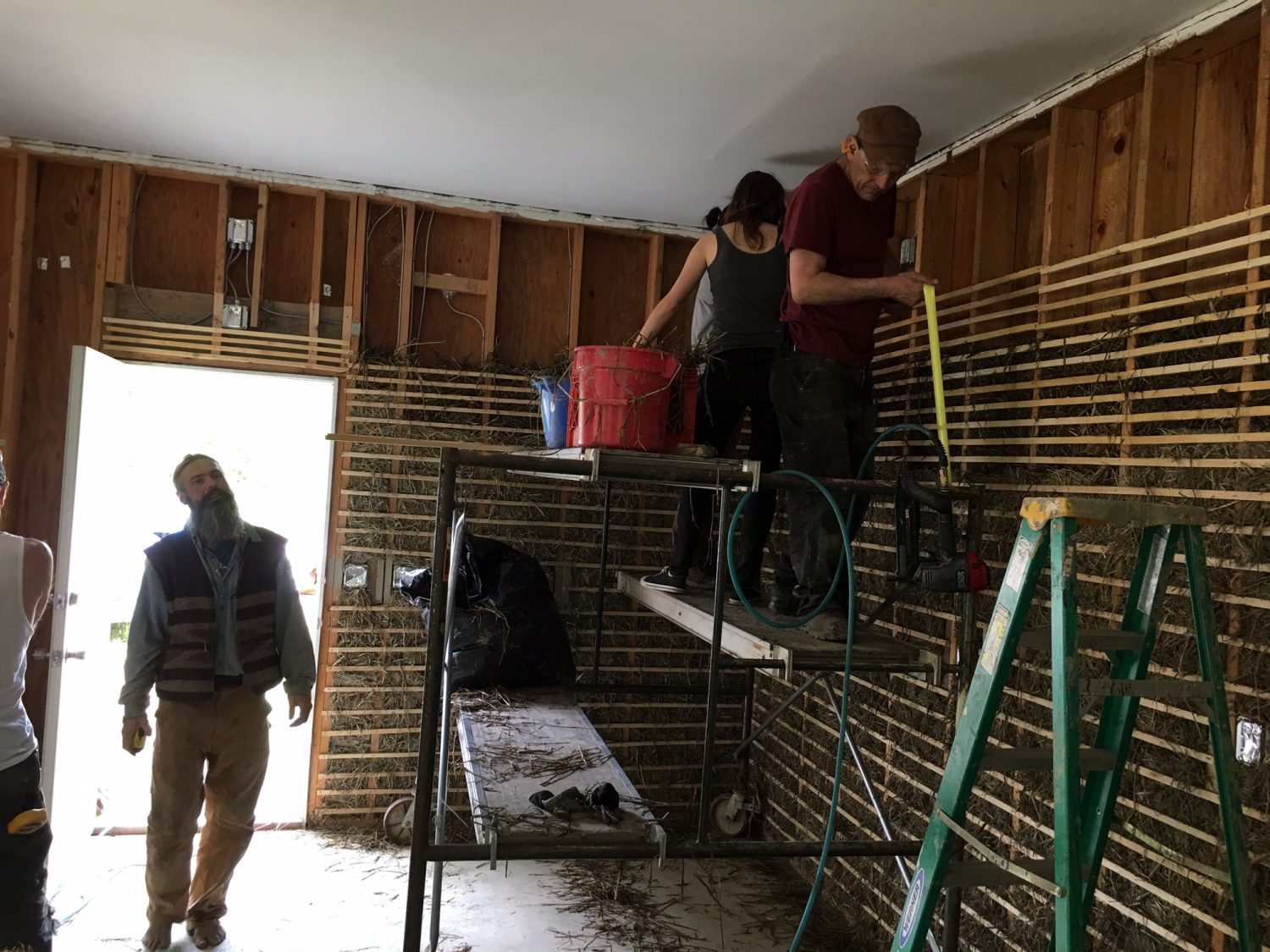
Recently, a group of natural builders gathered in Talkeetna to insulate a ‘shop type building’ for Northern Susitna Institute.
The Light Straw Clay Insulation technique was then taught in a workshop on June 10th, led by Lasse Holmes.
Mr. Holmes has been teaching workshops around the country for over decade and is also known as an expert on the rocket mass heater.
KTNA’s Katie Writer spoke with instructor, Lasse Holmes of Canyon Arts School of Natural Building about the advantages of using natural materials.
“One big advantage is the cutting out the whole industrial toxic construction material aspect of building. It’s utilizing the abundance of local resources that we have that naturally are here in surrounding our spaces that we live in.
So there’s an advantage in just the resonance of being surrounded by materials from our area. There is an advantage in not closing the place in with vapor barrier and plastic and allowing structures to actually breathe.”
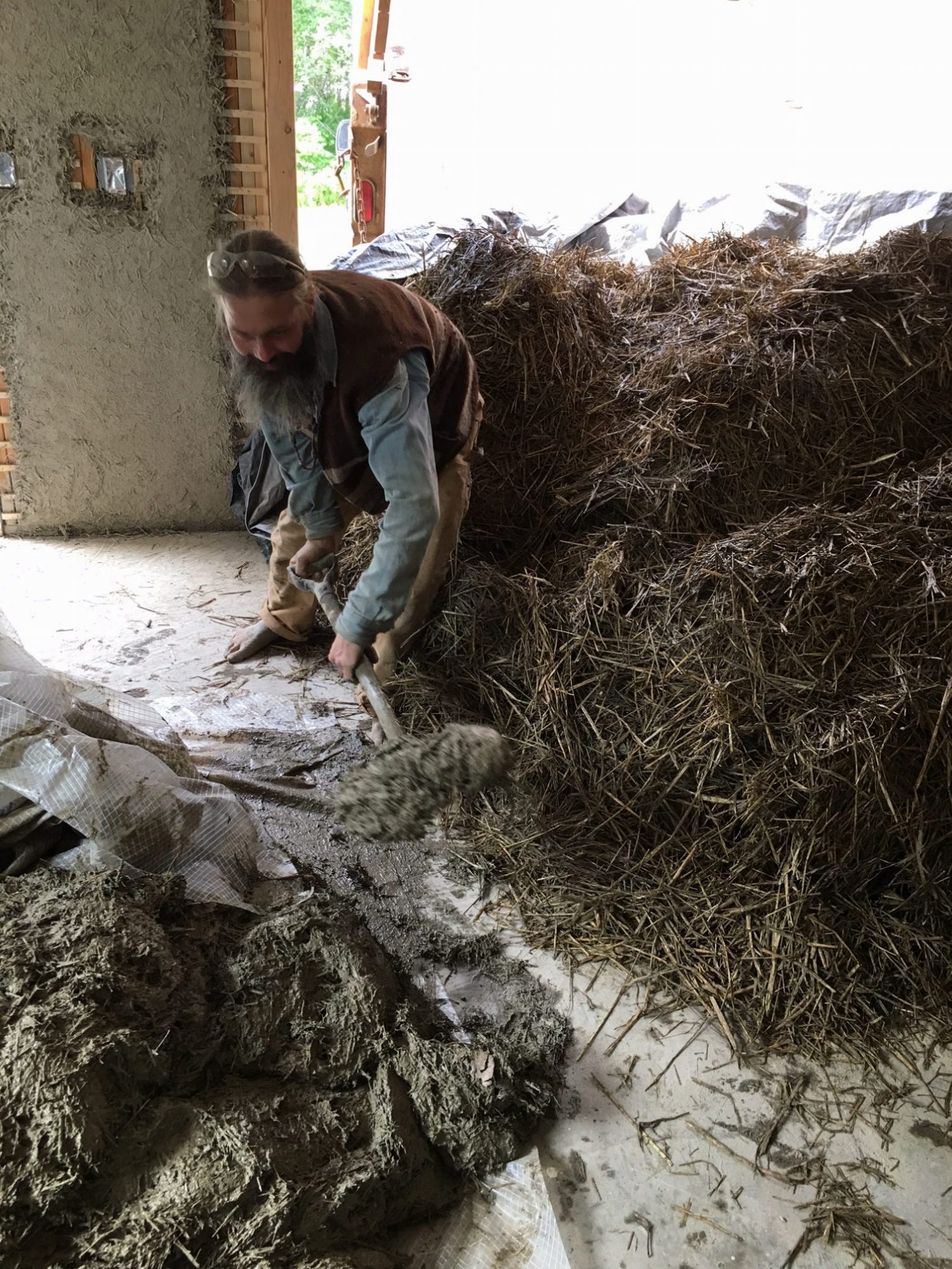
While visiting the site, there was a truck full of treated straw and a mushy pile of clay on the floor.
In addition, there was a beehive of activity of workers each on individual tasks. Joseph Bekker was securing lathe to the walls and then he and others would stuff the area with straw.
When asked about the labor costs, Lasse explains, “The labor costs are higher, because there is more handling of materials on site, but when you broaden the prospective to all the labor that goes into materials that you buy at the store, it actually is less labor overall.”
Lasse explains some details of the materials used.
“The straw material is pre-mixed in Ionia. The slip then is added to the straw and tumbled until it’s lightly coated.”
Without a doubt, there is a wonderful earthy feeling to the building process. Lasse explains the quality of clay as a natural building material.
“So the clay is the magic of it, it’s not just the glue that bonds it, but it also has some qualities that are hard to describe, hygroscopic is one of them. It is a technical term for the way it deals with moisture. It is constantly moving moisture.”
One of the last steps is the application of a face coat earth plaster. This stuff is a rough bulk mix of clay, sand, and straw that is applied over the lathe and straw clay. The plaster creates a nice hard base skin.
It breathes continuously, deals with moisture naturally.
One may wonder how the end result feels for a living space, once all the material has dried.
Eventually, the main earthy smells dissipate out and clay actually is naturally absorbent of smells and toxins. It naturally pulls out pollutants and such.
“What I find particularity captivating is the experience of walking into a natural building with these materials. There is a sound quality. There is basically a feeling. It is very relaxing. I have been watching this for years and it is inspirational.”
Laura Wright, a local who attended the workshop, is considering using the clay straw insulation technique. She says, “It was a great experience and I learned a lot about building practices and about healthful building. Normally one might use fiberglass insulation which is very expensive and unhealthy to use. The light straw clay mixture is very earth friendly, it is relatively inexpensive. There are a lot of labor cost involved in making it, but you can do it yourself.”