

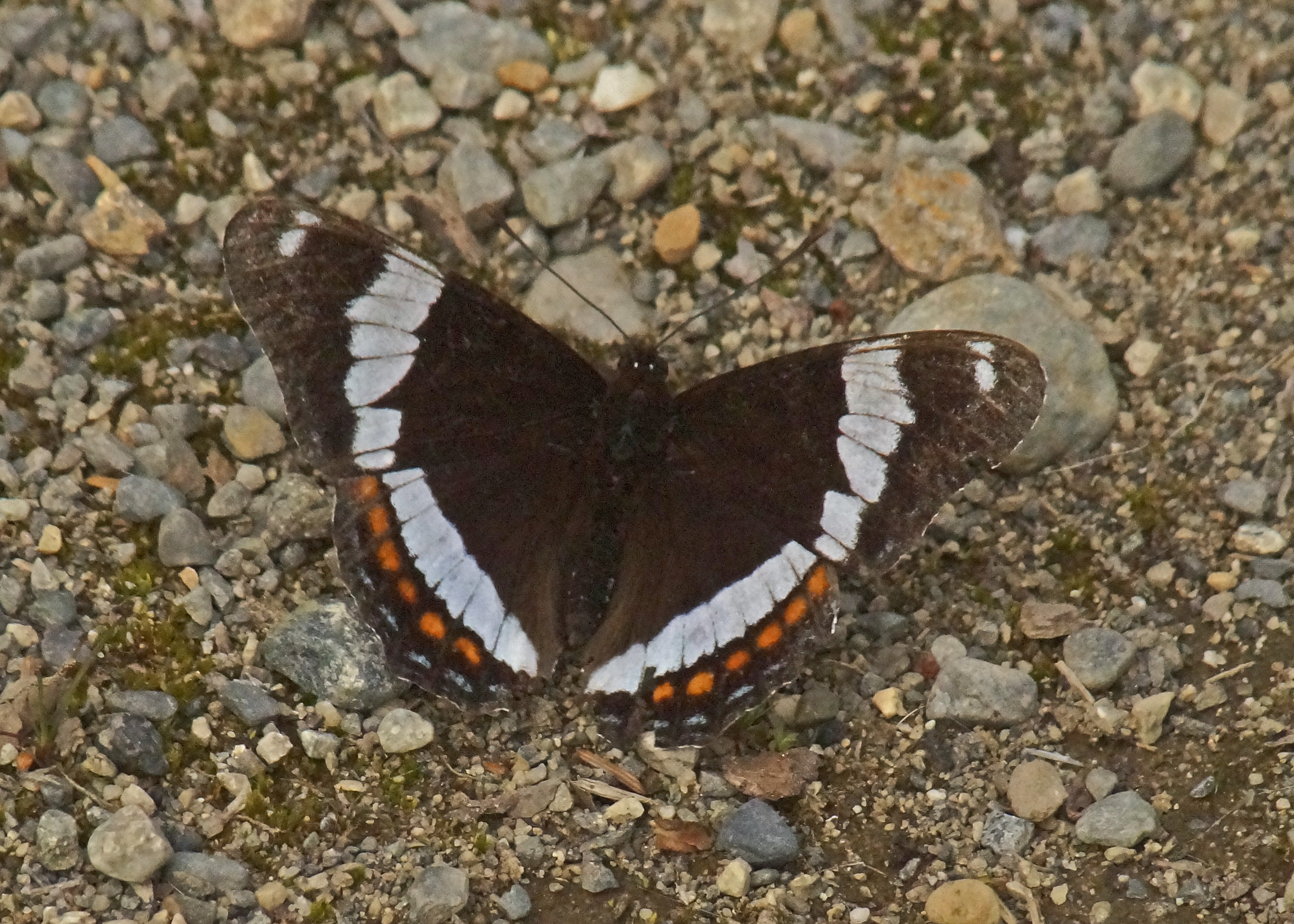
Summertime in Alaska brings many gifts. One of my favorites is the opportunity to observe insects and spiders. When I want some peace of mind for awhile, I take my camera and head for the garden. It isn’t long before I find my first insects amongst the flowers and plants. I am especially fascinated by small creatures. It amazes me how such tiny insects and spiders can survive the long winters, many finding places to crawl in and hibernate, their minute bodies withstanding dramatically cold temperatures for long periods. Even some butterflies, such as the large, velvet-brown Mourning Cloak, are able to crawl under the duff on the forest floor, enter a state of hibernation, and wait out the long winter. The snow cover acts to insulate them against the deepest cold. In the Spring, they are the first to emerge when the sun begins to put out warmth once again, waking from their long winter sleep when the snow has melted and they can crawl out from under last year’s dead leaves and resume their lives.
In Summer I refer to my outhouse as “The Spider Palace”, for as many as a dozen little arachnids make webs on the West wall-the best location for catching flying insects entering the small wooden structure. These spiders are so tiny that I can’t see their intricate body patterns until I take their photos and then use the zoom lens to study them. This year nine beautifully-patterned arachnids made their webs in the “Spider Palace”.
The spiders I find in amongst the plants are mainly Doily Spiders, a family named for the kind of web they weave, which lays delicately on top of leaves or grass or blossoms, barely noticeable, with the tiny spider perched at its center. They have very long, slender legs, and narrow, graceful bodies intricately marked; some crème and grey, others maroon and yellow.
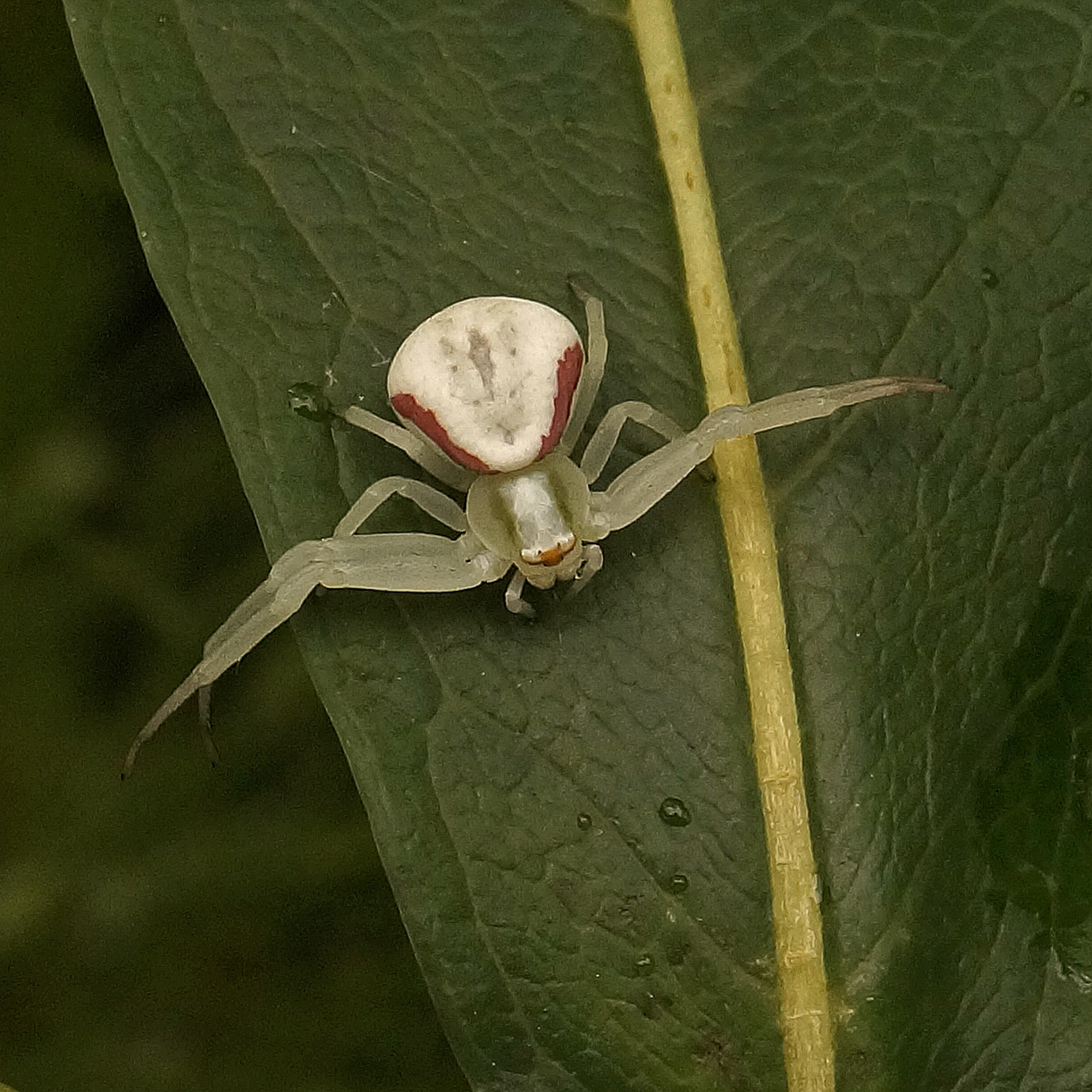
Last Summer I found a couple of Crab Spiders on the Daisies. They don’t spin webs, but wait in hiding under petals or leaves, ready to ambush an insect coming to visit the flower. They’re called Crab Spiders for their habit of putting their long four front legs together, when startled, in a defensive pose, making them look like the pinchers of a crab. The tiny spiders are beautiful- some white with green and red jagged markings along their sides, some are pale yellow, blending in perfectly with flower petals.
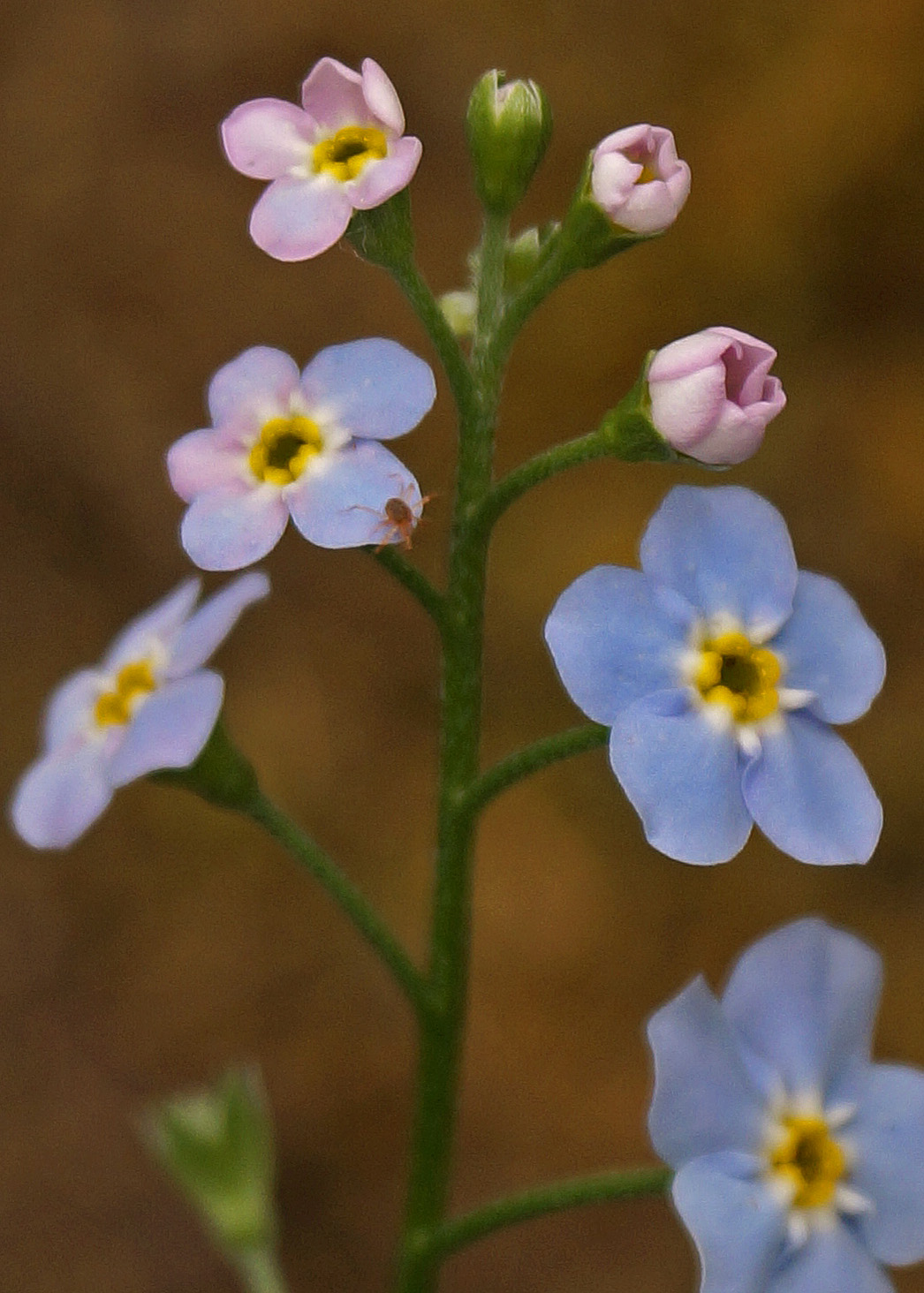
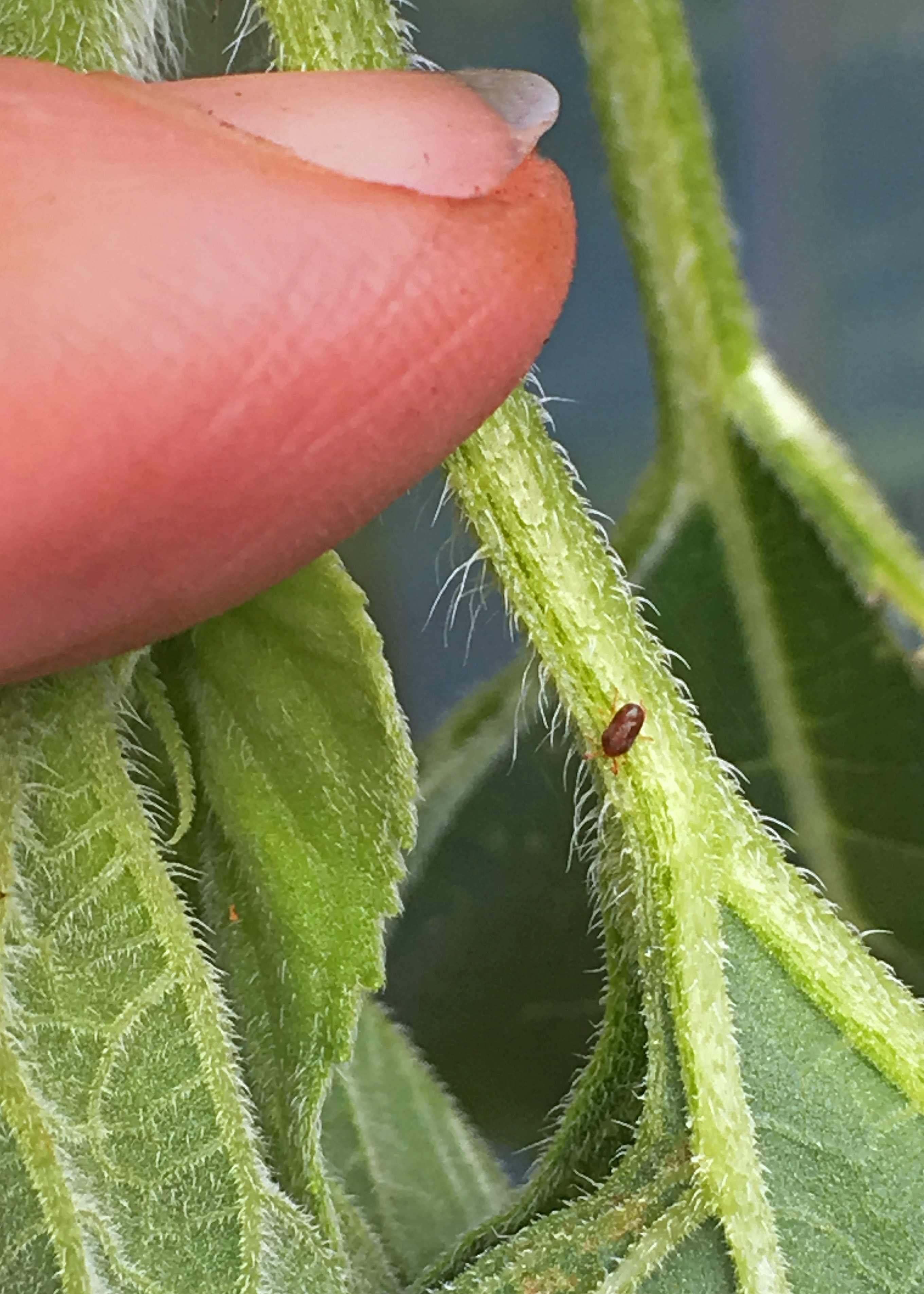
I found an impossibly small orange spider on my Forget Me Nots. So small that I didn’t even see it until I was examining my photos of the blossoms and noticed something on a petal. When I zoomed in on it, I was astounded to see this tiny creature in its perfect beauty. I couldn’t imagine what something so small was catching to eat, and how it could survive the long, cold winter, but there it was, living proof that tiny creatures can make it.
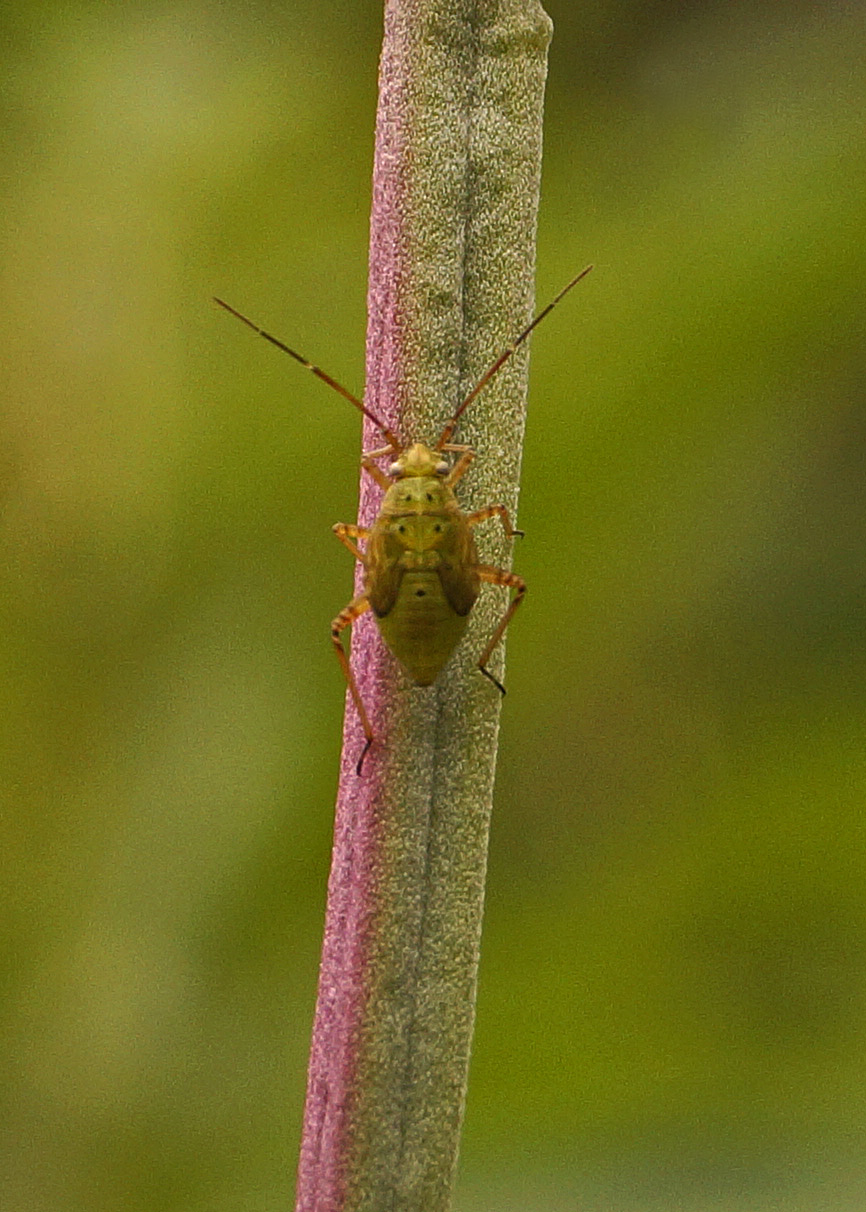
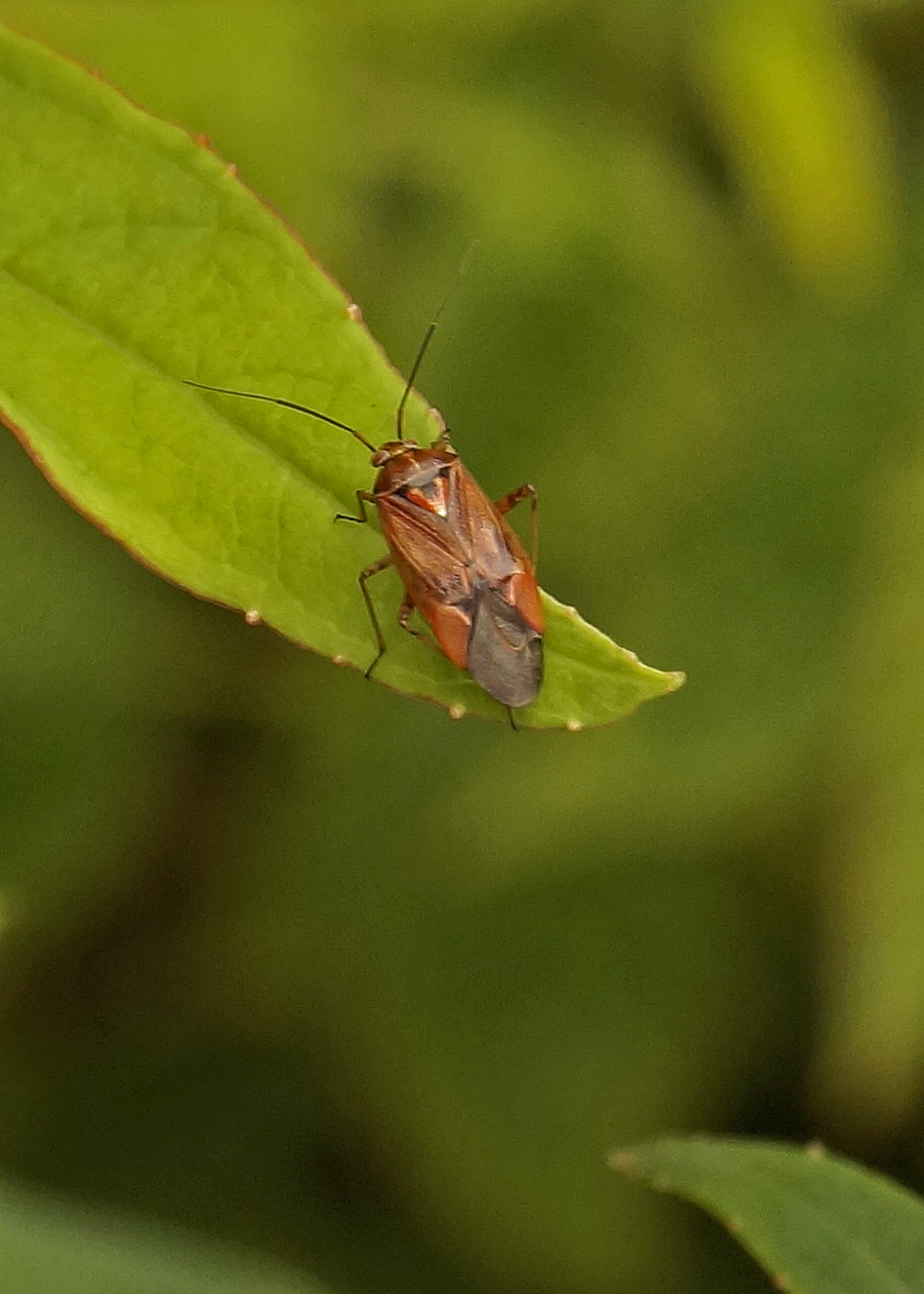
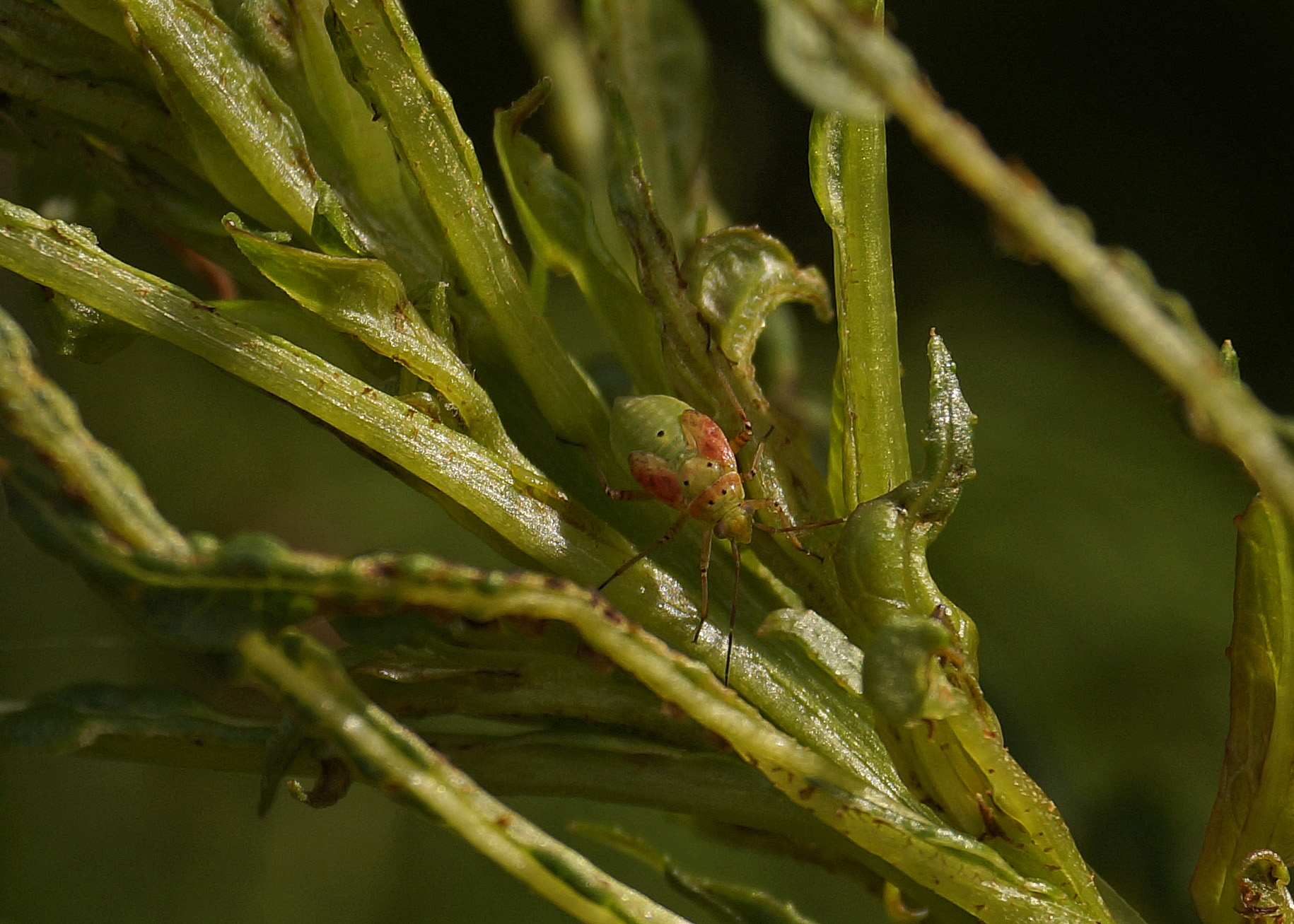
I discovered an insect new to me on the Fireweed plants. I was intrigued by their colors and intricate patterns on their angular bodies. I thought I was seeing two different kinds of insects, but when I did some research in my books, I found that I was observing both adults and larvae. They have an interesting name: the Tarnished Plant Bug. They are in the ‘True Bug’ family. While most people refer to all insects with the general name of ‘bug’, in entomology, the use of the term ‘bug’ is limited to the order ‘Hemiptera. Eighteen families, with one hundred fifty-eight species of the suborder Heteroptera have been identified in Alaska. One of the main characteristics of Heteroptera is their mouth-parts, which are modified into a piercing-sucking stylet. They are able to extract juices from plants and insects alike. Some true bugs are capable of sucking the blood of birds, reptiles, and mammals. Most live on land, and a few are aquatic. Another feature is the triangular thorax. In some species this triangle is large enough to entirely cover the wings, giving the insect a smooth, hard-shelled appearance.
I was pleased to learn from my “Insects of South-Central Alaska” book that the Flower Bugs, in the family Anthocoridae, are also true bugs, and thirty-three species with three genera are found in south-central Alaska. They are important because they are opportunistic in their choice of prey, usually found hiding in flowers or under loose bark. The nymph of the Flower Bug, a scant three-sixteenth of an inch in length, feeds on bark beetle larvae and-according to the book- “have been used successfully in biological control.”
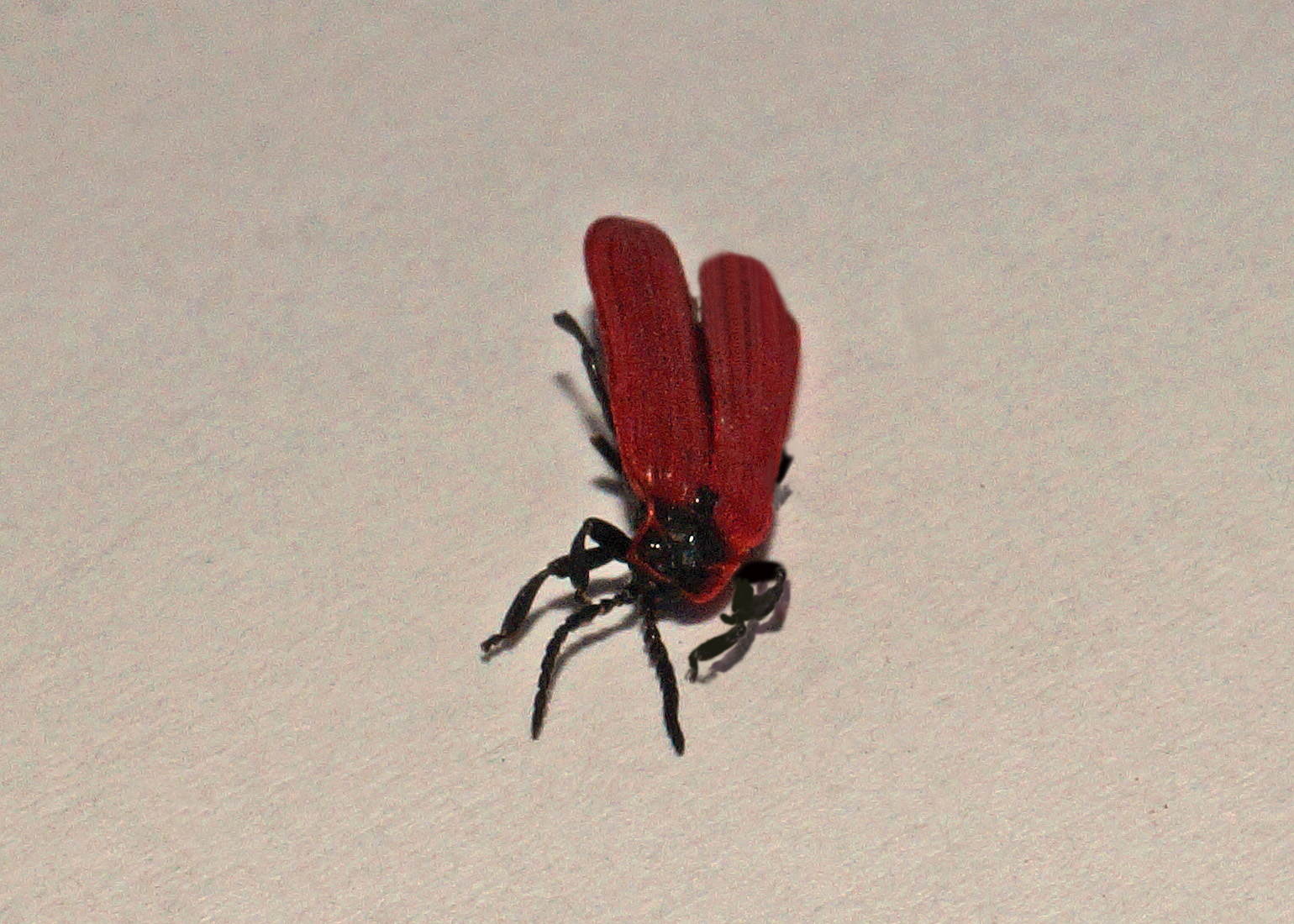
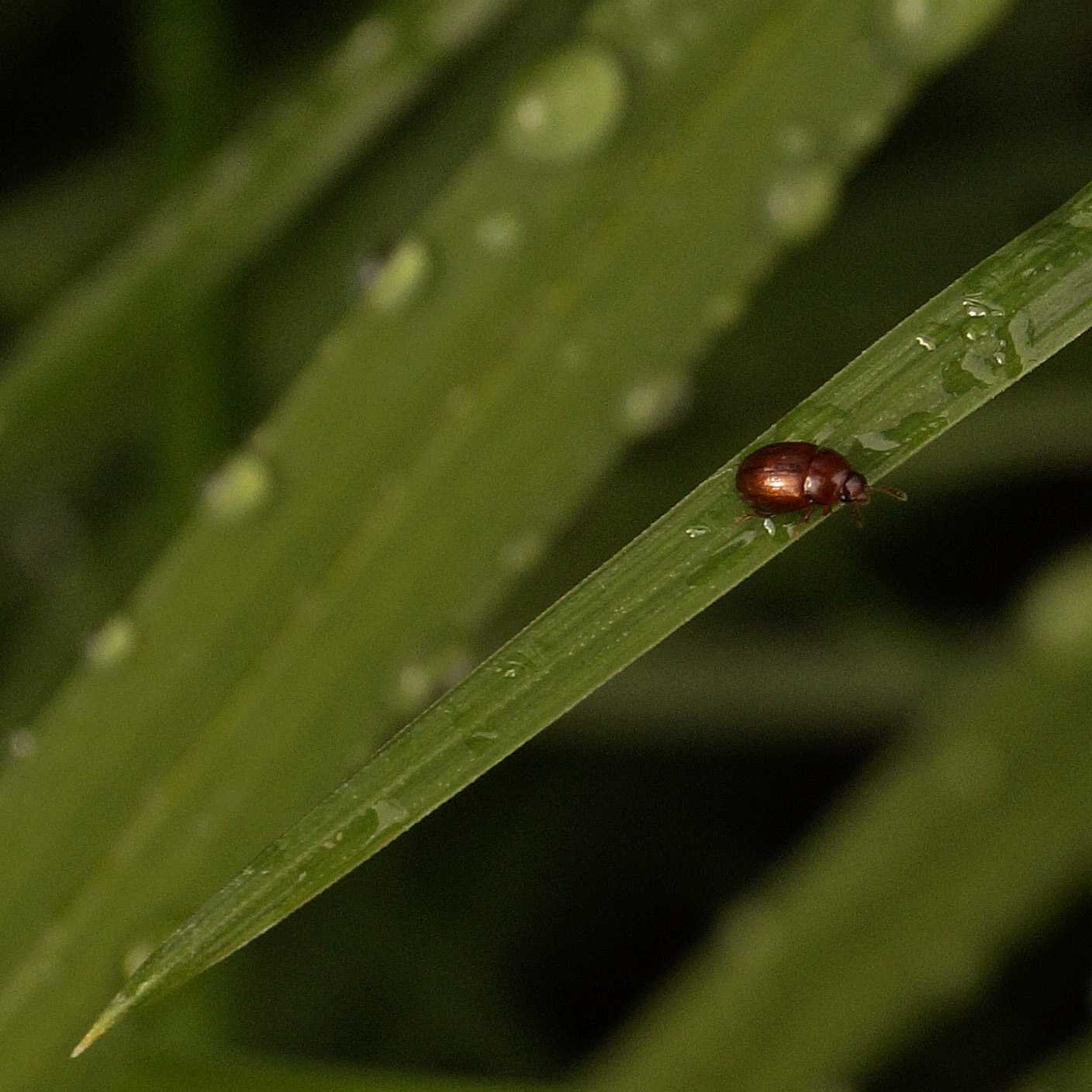
Another insect I discovered-so small that at first I thought it was a speck of dirt on the frond of the Day Lily- turned out to be a minute bronze-colored beetle. I couldn’t find it in either of my insect books. A much larger and bright-red beetle was documented in both books. It has a captivating name: “Eros aurora”,or “Golden net-winged Beetle”. Its conspicuous ridged cherry-red wings extend the length of its black body and warns predators that its species is toxic. I found a female, which has shorter antennae than the male.
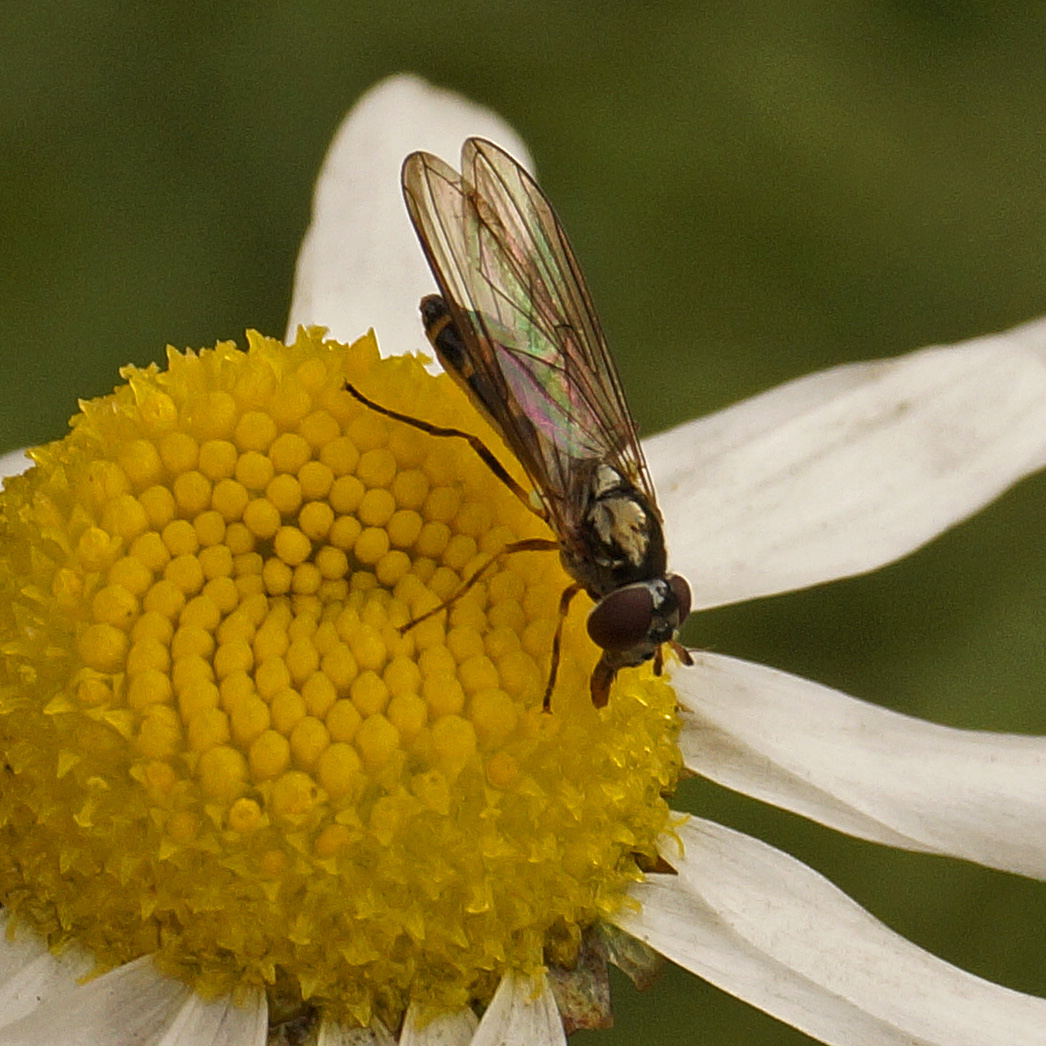
I found several different fly species on the Daisies, along with a few beetles. All were feeding on the pollen-rich yellow centers of the flowers. One, with very large dark-red eyes, and a slender black and yellow-striped body, caught my attention. It wasn’t a Hover Fly, with which I am familiar. This was smaller. I found it in the Insect book listed as a Flower Fly, in the subfamily Syrphinae. I read that its larva raids aphid colonies. Like something out of a horror movie (to the aphids), it’s described in the book as grabbing an aphid with its powerful mandibles, slinging it into the air without letting go, sucking the aphid dry, then discarding the empty body shell and immediately grabbing another aphid. I have seen very few aphids in the garden, this year, and several of these Flower Flys. Now I know what put a sizable dent in the aphid population.
Towards mid-August we experienced a few days of heavy rainfall. I stayed indoors, listening to the rain pounding the porch roof. I watched several little birds taking refuge on the porch beams, inspecting my hanging flower baskets for insects. When there was a break in the rain, one evening, I took my camera and headed outside, curious to see what was going on with the insects and spiders. I visited the areas where I had found insects and spiders a week or so earlier. I found a few insects and spiders taking refuge under leaves-including a Crab Spider under a Fireweed leaf. Another tiny red and black spider rested motionless on the underside of another Fireweed leaf. To my surprise, the minute orange dot of a spider scurried around a raspberry leaf. One direct hit from a raindrop would have sent this tiny thing to the ground, but it was obviously adept at keeping itself out of harms way. A graceful, long-legged Crane Fly was resting on the inside curl of a grass blade, raindrops glistening all around it. The Doily Spider was still in the center of her delicate-looking web. Somehow the pounding rain did not effect either her or her gossamer web. In the respite between rainfalls, the beetles and flies were busy at the Daisies once again, taking the opportunity to feed. The birds were also busy all around me, many hunting for insects amongst the leaves and spruce boughs. I stayed until a light rain began to fall again, signaling that it was time to get my camera indoors.
Summer is a busy time for everyone. In the short season a lot must be accomplished in the natural world. Finding mates, reproducing, the almost endless search for food…it’s the same for birds, insects, and mammals alike. For me, it’s a privilege to get out and observe the goings-on in the forest around me. To see things I won’t get to see once the weather turns cold and flowers die, insects and spiders go into hibernation, and life seems to collect in on itself and slow down. Rain or shine, I cherish every moment I get to watch the wonders that summertime displays. Even the very small.
Susitna Writer’s Voice,KTNA
Natural Observations
080818