At Su Valley Junior-Senior High School, a new food pantry program is helping to ensure that local youth are getting enough to eat. KTNA’s Phillip Manning visited Su Valley, and spoke with some of the organizers about the pantry and other programs to make sure students are being fed.

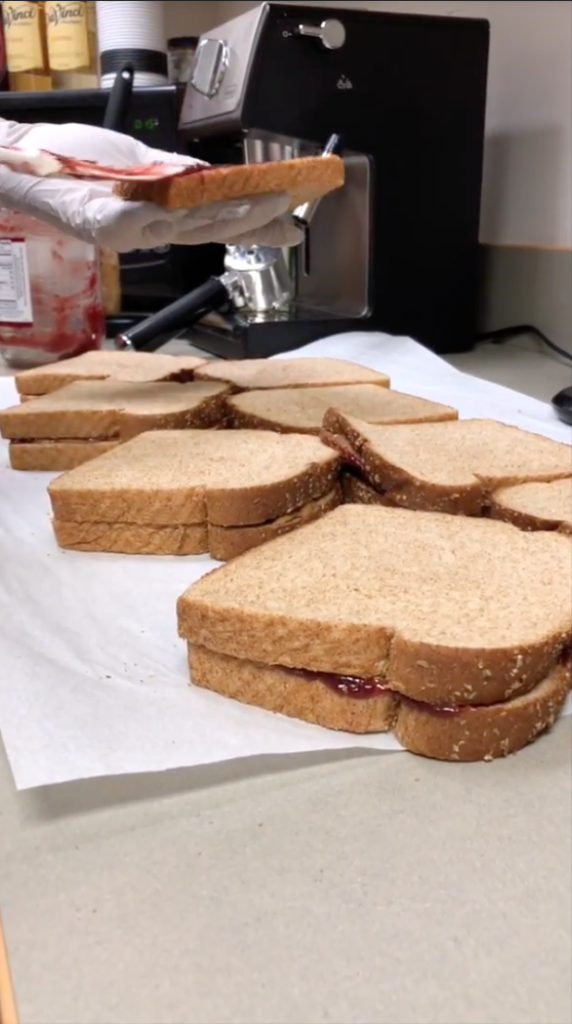
On a recent Friday morning, Su Valley Foods Program Coordinator Marie Richter shows me the area where she and student aides spend a significant amount of time making almond butter and jelly sandwiches for students. The idea is that any student can take a sandwich in case they get hungry later in the day.
“We typically make twenty to thirty sandwiches for each lunch. If they don’t all go for the first lunch…then we just make additional so we have enough for high school lunch. Then, the kids can just grab it on the way back to class.”
The sandwich program started near the beginning of the current school year. In the first semester, Marie Richter says over 5,000 sandwiches were given to students.
Recently, a new program has begun at the school in collaboration with the Upper Susitna Food Pantry. In a small room near the library, a mini-pantry has been set up. The poverty rate amongst Su Valley students has climbed to over sixty percent in recent years. In addition, the school has the second highest rate of families in transition in the Mat-Su Borough School District. That term refers to students who are homeless, couch surfing, or emancipated minors. Richter says that makes it difficult for them to visit the Upper Susitna Food Pantry.
“They may live in a dry cabin by themselves, and not have any access to going grocery shopping, or they can only catch the bus. So, this is a really good thing.”
Su Valley Principal Lisa Shelby has seen the impacts of youth hunger firsthand. She says there have been multiple instances of students asking teachers for food, or even stealing it.
“Last year, at the beginning of the year, we had a couple instances of students stealing food, whether it was from teachers’ classrooms or off the line at lunch. So, I found myself having to deal with discipline for stealing food, and it’s like ‘Oh my gosh, there’s something wrong with this problem.’ We need a solution for this. This should not be discipline.”
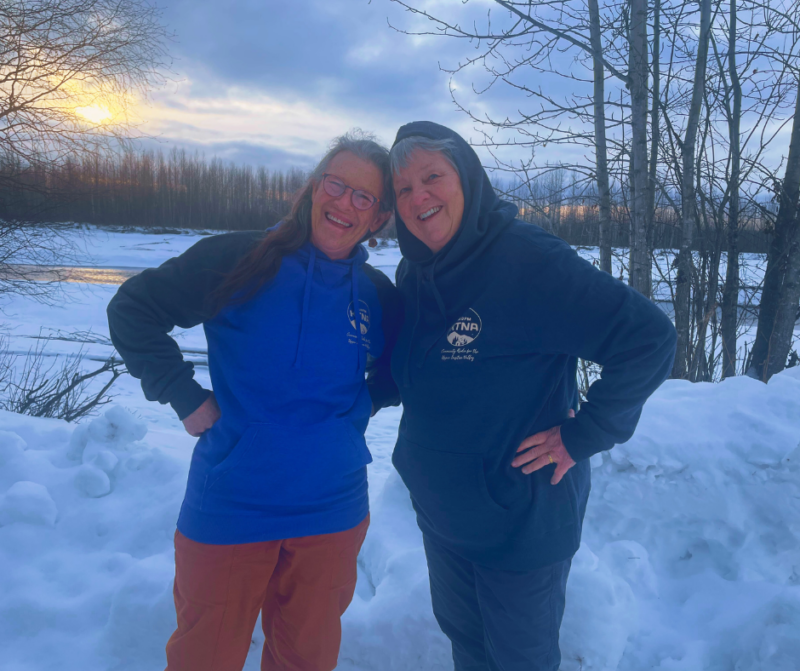
Louanne Carroll-Tysdal runs the Upper Susitna Food Pantry, and has collaborated with Su Valley staff to get the new pantry going, including helping secure funding from the Food Bank of Alaska.
“I have to say that Marie [Richter] is fantastic. She puts so much time and effort into it. We’ve had volunteers from the community step in to offer help us stock it. Several organizations are wanting to collaborate with us to keep the shelves full. Obviously it’s a project that was needed, so I think the timing was just right.”
Louanne Carroll-Tysdal also coordinates the brown bag program, which allows students to take home food on Fridays, and the summer backpack program, which gives students food when school is out of session. She says feedback from families has been very positive.
“We’ve gotten some very good feedback about parents telling us that they work—they’ve had to leave their kids home alone—struggling to feed them. The bags have made it so their kids have food to eat while they’re gone….I’ve had several parents tell me that was the edge that allowed them to buy school shoes and winter coats.”
Those programs will continue alongside the new pantry. One potential obstacle in any program that distributes free food is avoiding the stigma of needing to ask for help. Lisa Shelby says that stigma has largely faded from the Su Valley programs, and those who need access are getting it.
“All along the way, we’ve said this is open to any and every kid to break down that stigma. We just decided, knowing our own data and our kids…at any time any kid can be in need, just depending on what’s going on in their world and their life at home”
In its second week, about sixty students visited the Su Valley pantry, nearly one-third of the student body. Next year, the plan is to move the pantry into a larger space and increase the types of items offered. Louanne Carroll-Tysdal says, going forward, the plan is to take personal care items, some of which are currently available in the nurse’s office, and incorporate them into the pantry.
“We also see kids that need personal care items, that need access to toothbrushes and toothpaste, deodorant, shampoo, so we’re trying to build it into a basic needs, comprehensive type of pantry.”
The program is funded for a full year through the Alaska Food Bank, with a potential for a second year of funding. Lisa Shelby says one thing that can help with sustainability is demonstrating effectiveness. As a result, she plans on keeping track of certain trends at Su Valley.
“This is just the first year, so we don’t have any trends, yet. But attendance, discipline, grades overall, over time we’ll have to see what those trends look like….Attendance and discipline, for sure…I think we can attribute to just not being hungry, you know, staying in class.”
As the school year winds down, Lisa, Marie, Louanne, and a large group of volunteers and donors will continue to do everything they can to make sure that the youth of the Northern Susitna Valley are fed.