At the end of every day, students received a bead for their day’s efforts and to serve as a reminder of their role as stewards of the environment and others. Everyone also shared a bead to others who they thought deserving of a stewardship bead. Alaska Coastal Studies instructors want students to spread the word about their trip and stewardship roles by wearing their beads with pride. Photo by Katie Writer – KTNA 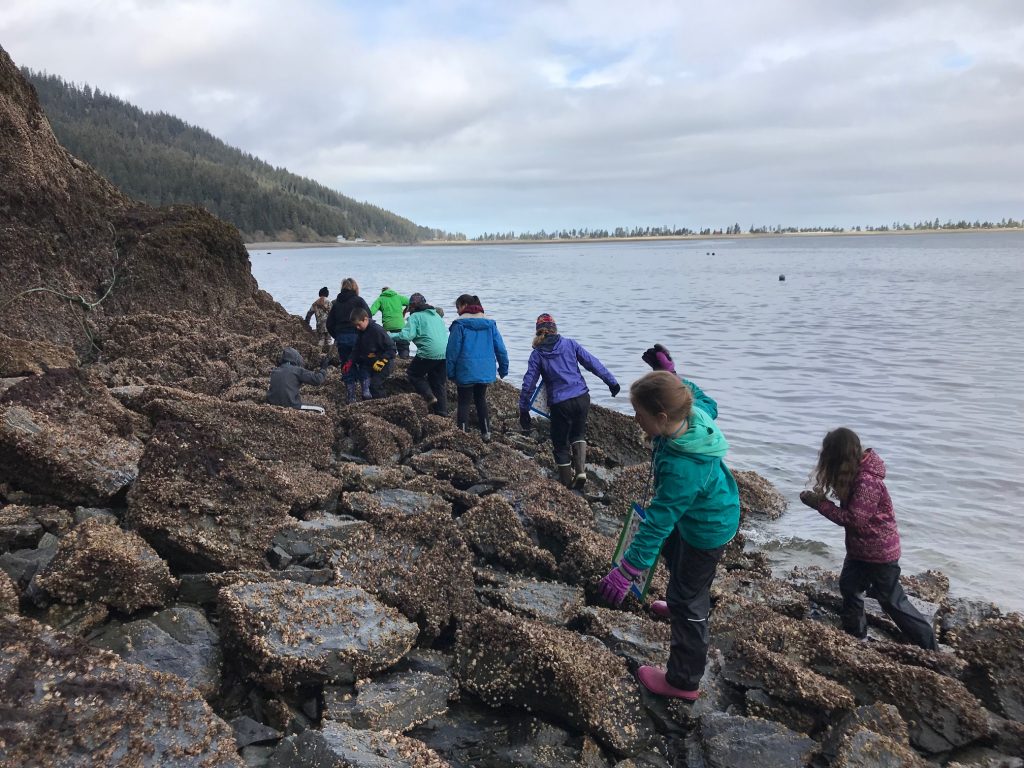
Students look for wildlife along the shore during the 2019 Talkeetna Elementary K-Bay trip. Photo by Katie Writer – KTNA 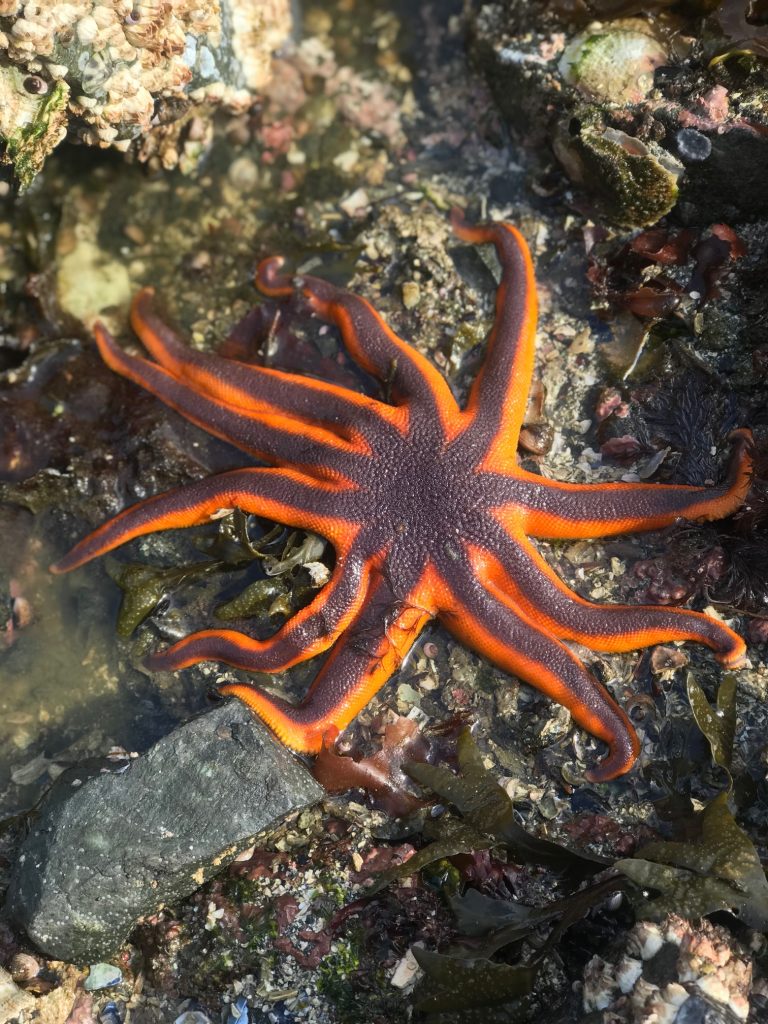
Sea star spotted on the 2019 Talkeetna Elementary K-Bay trip. Photo by Katie Writer – KTNA 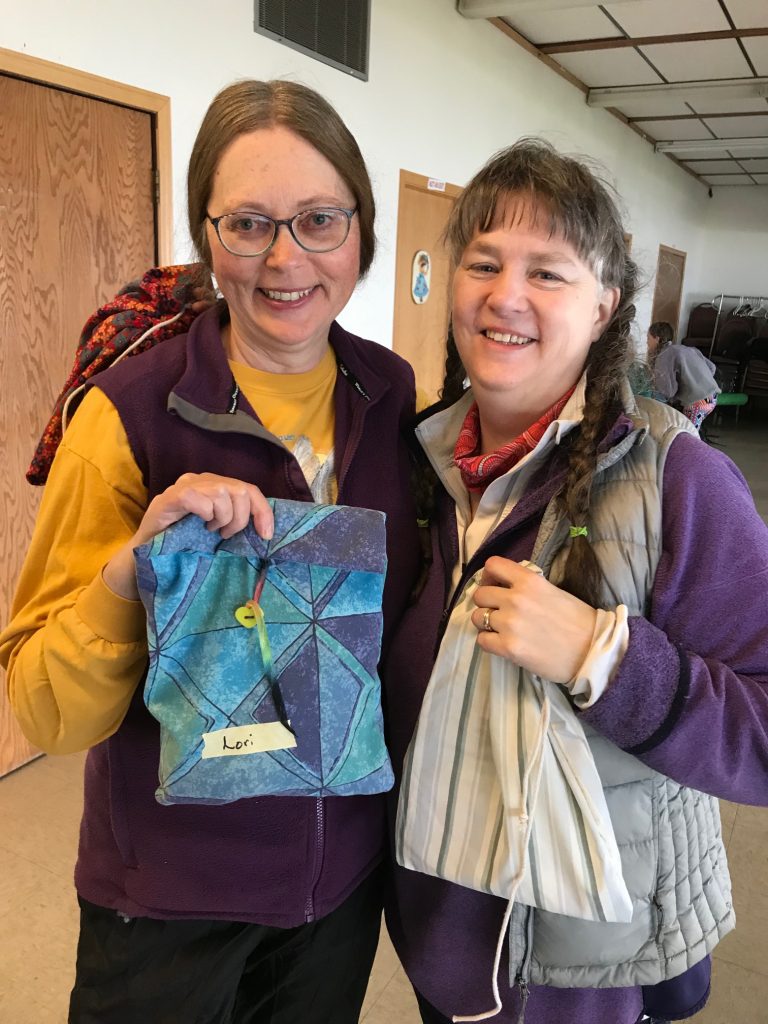
Talkeetna Elementary School Teachers Lori Holcomb (l) and Lisa Curtis. Photo by Katie Writer – KTNA 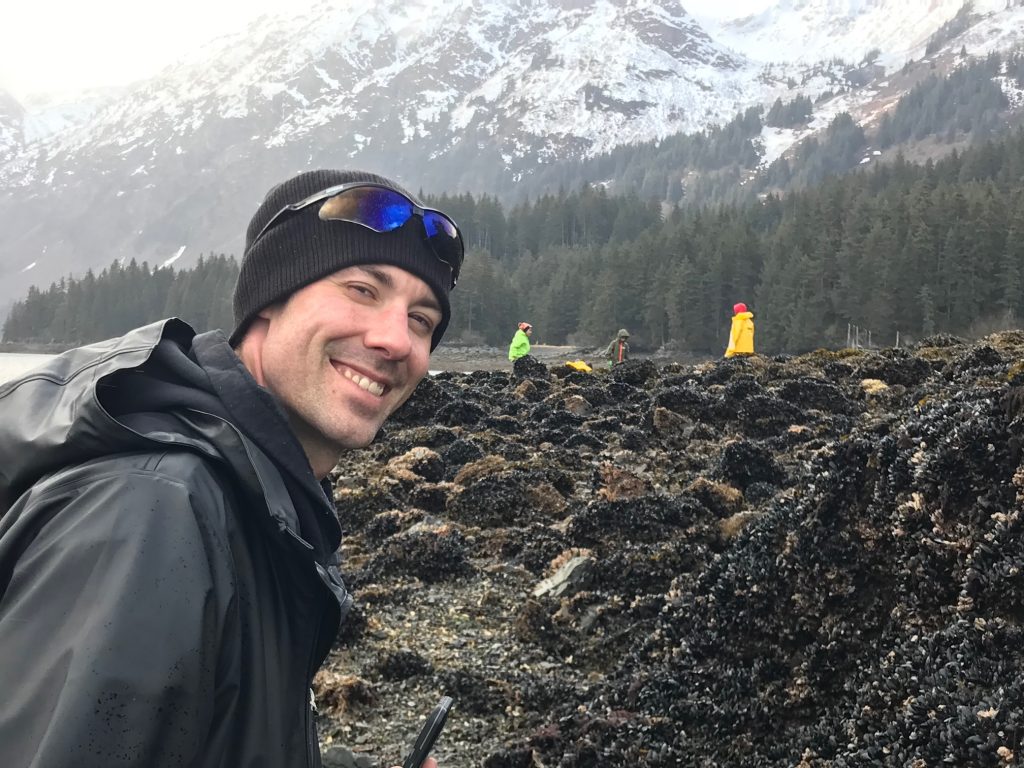
Caleb Kardash visits KBay for the first time since he was a Student in this trip years ago. Photo by Katie Writer – KTNA 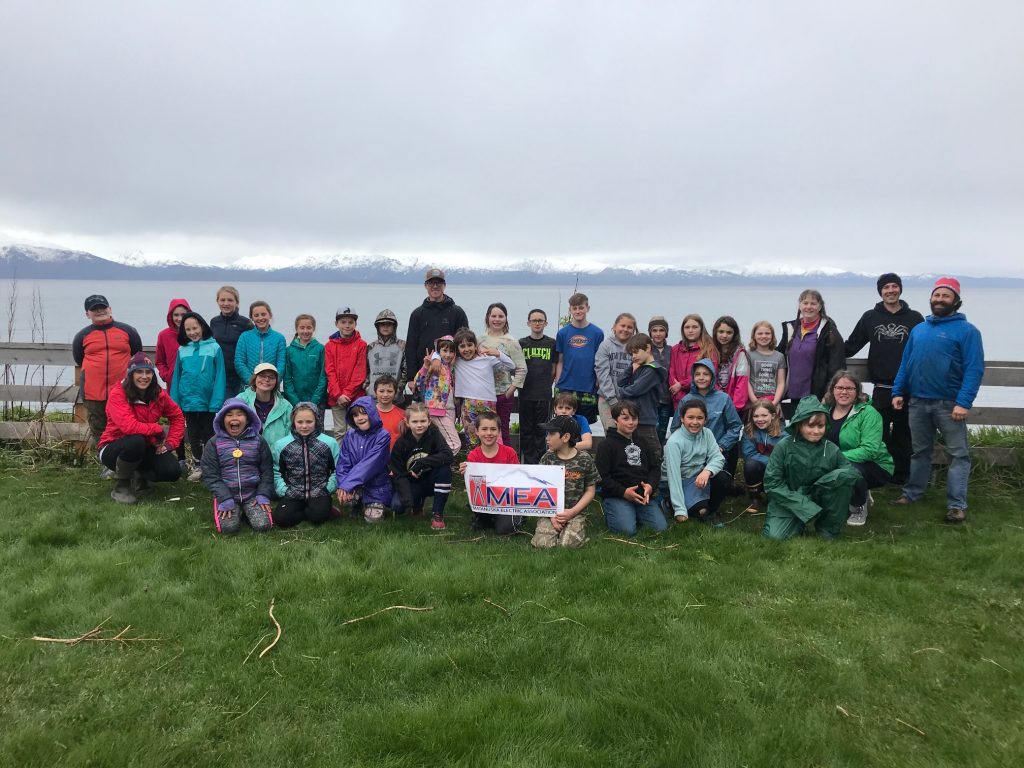
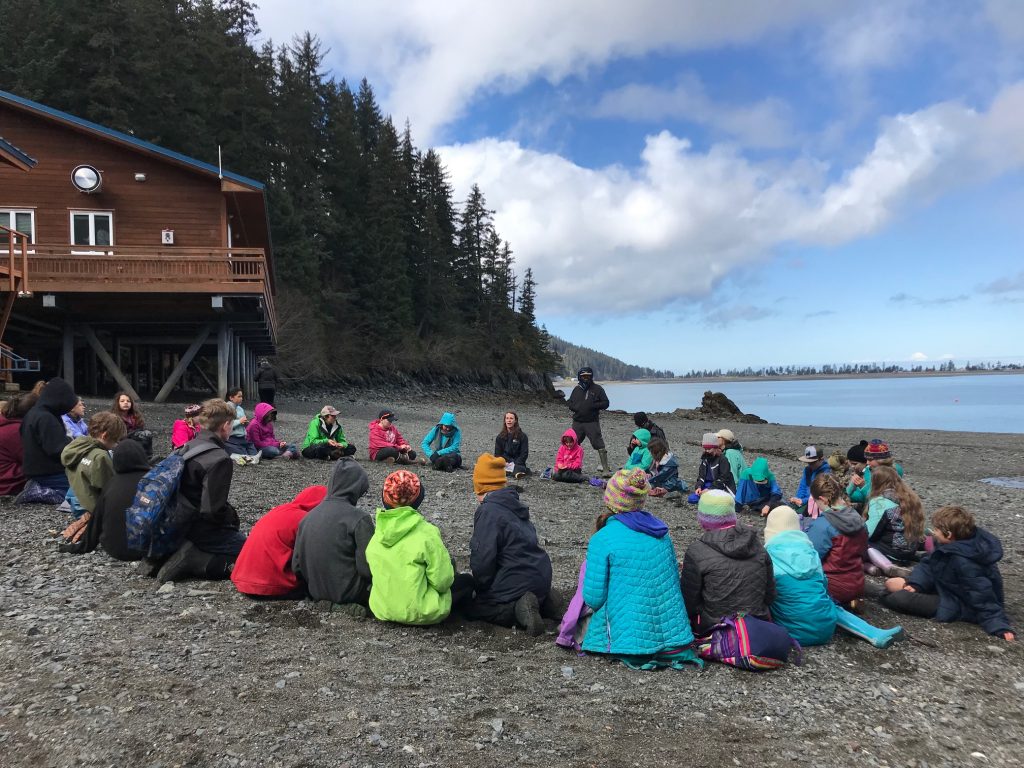
Group photo from Talkeetna Elementary’s K-Bay field trip. Photo by Katie Writer – KTNA 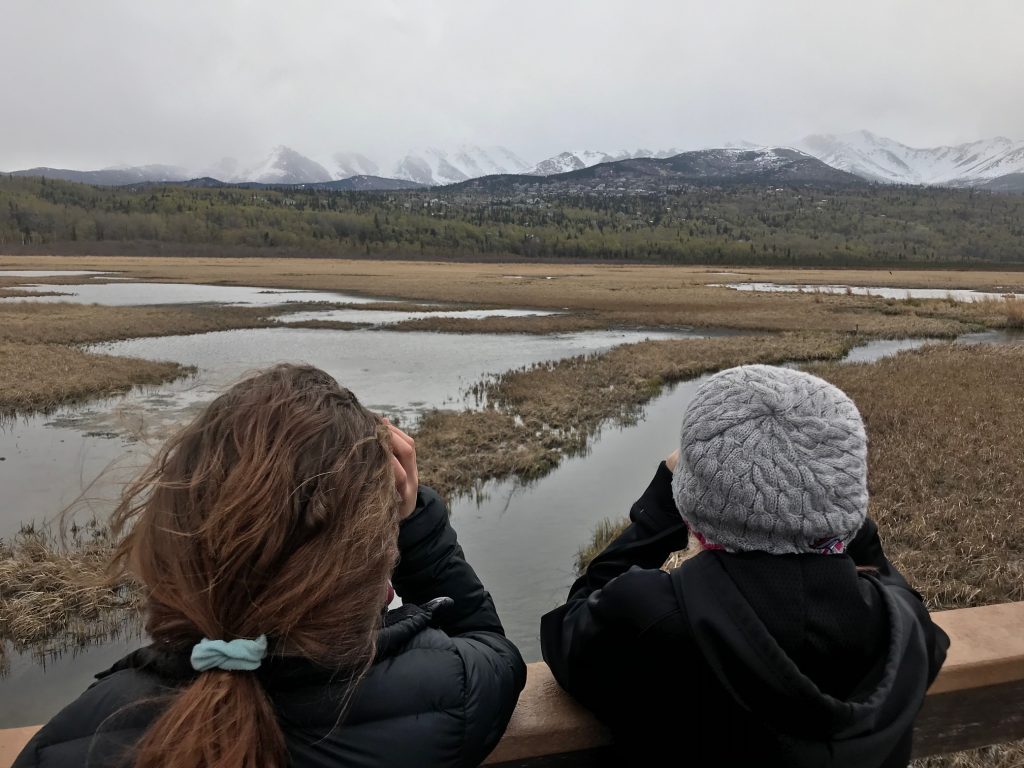
Talkeetna Elementary students look for the falcated duck at Potter’s Marsh. Photo by Katie Writer – KTNA 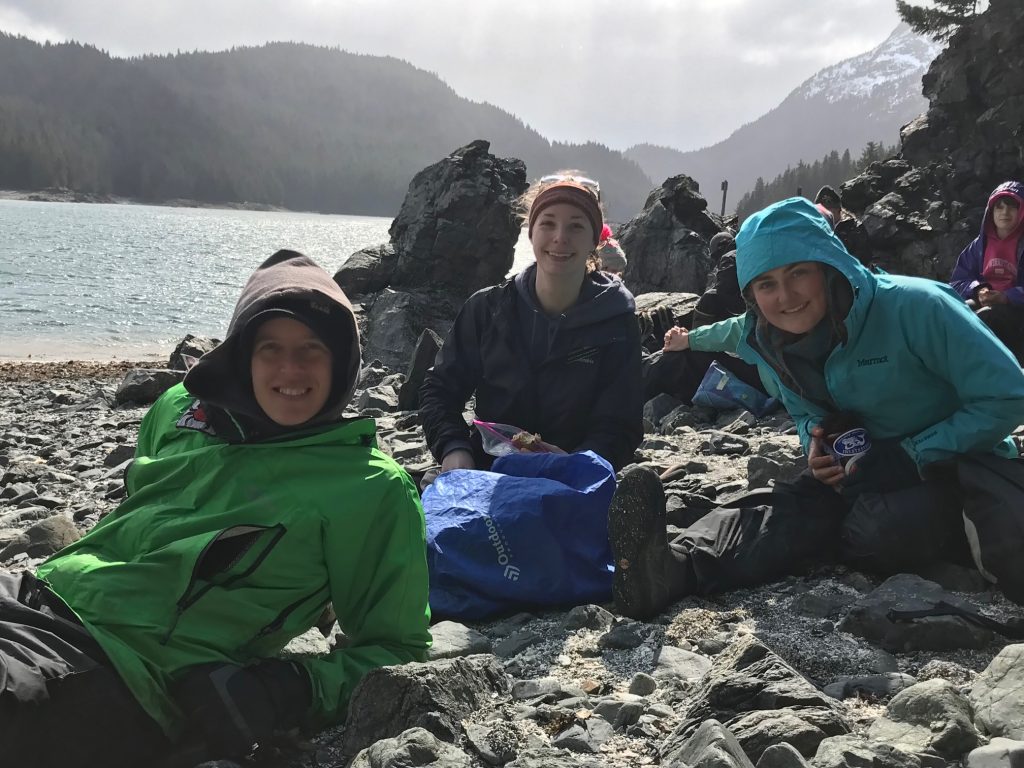
(l to r) Kim McNett, Shannon Moore, and Misha Klassen are passionate about teaching marine field studies and stewardship philosophies to the youth. Photo by Katie Writer – KTNA
Thirty-eight students, eight chaperones and teachers of Talkeetna Elementary School crossed Kachemak Bay for an intensive learning experience with the Center for Alaskan Coastal Studies(CACS). While a tremendous amount of learning about the coastal environment happened in the classroom, the students gained another level of learning in the tide pools of Kasitsna Bay. The boat ride on the “Discovery” included passing by Gull Island for a phenomenal closeup to hundreds, maybe even thousands, of marine birds nesting.
4th and 5th grade teachers, Lori Holcomb, Lisa Curtis, Jamie Westnedge, and Mariah Smith of Talkeenta Elementary School got to see their students morph into efficient young explorers whose skills included gear chain technique, making and serving food, and following the “TOES” etiquette of the Center for Alaskan Coastal Studies. The “TOES” acronym stands for Time of Tides, Others, Environment, and Self.
Over the 3 days on site of this NOAA Kasitsna Bay Laboratory, over 50 species were touched and identified. Groups of 5 students were given names such as Moon Snails, Hermit Crabs, Chitons, Nudibranch, and Sculpins. When a student located something special under a rock, they’d call out, “Disco…” meaning that they had a ‘discovery’. Others would gather to examine the diversity of sea animals present in Jakolof Bay. One late morning provided a low tide to round a corner where an octopus marveled even the longtime CASC instructor, Kim McNett. All agreed that the coastal environment was sharing it’s magic.
Tips on special handling and returning the animals to their spots were emphasized, as some were protecting their eggs. Students also received a lesson on sea vegetation and how scientist classify different types by color. The tour of the laboratory was a favorite; microscopes provided another sense of scale to examine the incredibleness of micro-organisms in a mere drop of sea water. Touching tanks filled with sea animals was popular and while getting to touch these creatures, a flapping whale tail was spotted in the bay; perhaps a hunting humpback.
Thanks to the US Fish and Wildlife of Anchorage, binoculars were provided for every student to get a closer look at birds, which ranged from bald eagles to colorful harlequins and american wigeons. The group even stopped by Potter’s Marsh to attempt to see the rare sighting of the falcated duck.
The long held tradition of this Kachemak Bay field trip remains as a childhood memory for multiple generations of the Upper Susitna Valley. The popular K-Bay field trip happens every other year, thanks to all of the hard work of the teachers’ and students’ fund raising efforts as well as multiple donors who are fostering young mind’s to be stewards to the environment.
4th and 5th grade teachers, Lori Holcomb, Lisa Curtis, Jamie Westnedge, and Mariah Smith of Talkeenta Elementary School got to see their students morph into efficient young explorers whose skills included gear chain technique, making and serving food, and following the “TOES” etiquette of the Center for Alaskan Coastal Studies. The “TOES” acronym stands for Time of Tides, Others, Environment, and Self.
Over the 3 days on site of this NOAA Kasitsna Bay Laboratory, over 50 species were touched and identified. Groups of 5 students were given names such as Moon Snails, Hermit Crabs, Chitons, Nudibranch, and Sculpins. When a student located something special under a rock, they’d call out, “Disco…” meaning that they had a ‘discovery’. Others would gather to examine the diversity of sea animals present in Jakolof Bay. One late morning provided a low tide to round a corner where an octopus marveled even the longtime CASC instructor, Kim McNett. All agreed that the coastal environment was sharing it’s magic.
Tips on special handling and returning the animals to their spots were emphasized, as some were protecting their eggs. Students also received a lesson on sea vegetation and how scientist classify different types by color. The tour of the laboratory was a favorite; microscopes provided another sense of scale to examine the incredibleness of micro-organisms in a mere drop of sea water. Touching tanks filled with sea animals was popular and while getting to touch these creatures, a flapping whale tail was spotted in the bay; perhaps a hunting humpback.
Thanks to the US Fish and Wildlife of Anchorage, binoculars were provided for every student to get a closer look at birds, which ranged from bald eagles to colorful harlequins and american wigeons. The group even stopped by Potter’s Marsh to attempt to see the rare sighting of the falcated duck.
The long held tradition of this Kachemak Bay field trip remains as a childhood memory for multiple generations of the Upper Susitna Valley. The popular K-Bay field trip happens every other year, thanks to all of the hard work of the teachers’ and students’ fund raising efforts as well as multiple donors who are fostering young mind’s to be stewards to the environment.