In this StarDate Susitna, Kathleen talks about the November full moon, the upcoming Leonid Meteor Shower and more. Correction to audio – As seen from Earth, Mercury usually appears about 7 Moon-widths above or below the Sun at inferior conjunction, NOT 14!
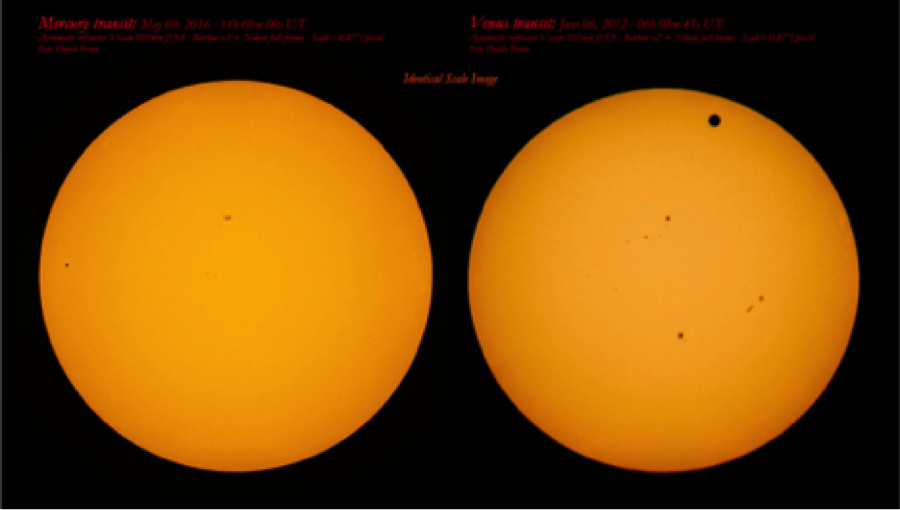
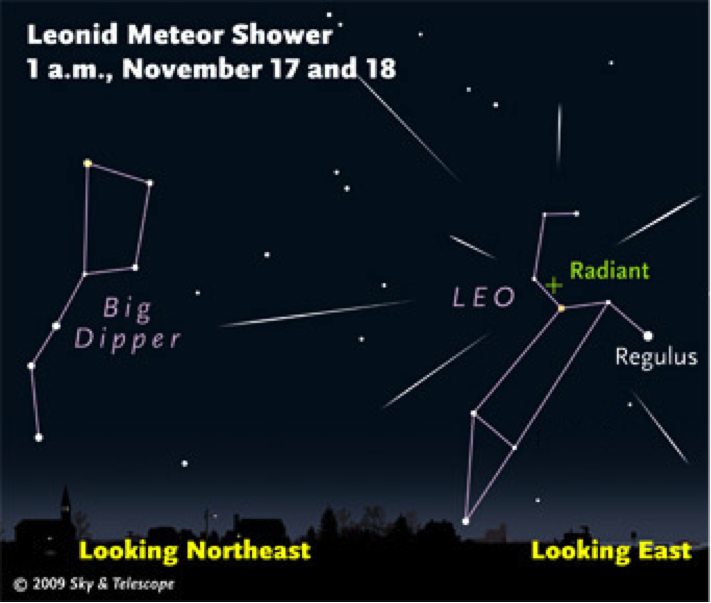
Here is a comparison of the 2 planets that can transit the Sun (from Earth’s perspective). Any view of the Sun requires proper solar filters to protect your eyes. A Transit of Mercury also requires magnification, since the planet is so far away and tiny (black spot at far left in first image). Next one is in 2032. Venus, however, is nearly the same size as Earth and about half the distance to Mercury. The larger black spot (upper right 2nd image) of Venus can be seen without magnification. Next one is in 2125! This year the Leonids offer only 10-15 shooting stars per hour, less due to bright moon-light. The radiant in the head of the lion will be highest before dawn. Since meteors can streak far from the radiant, it’s best to view a shower when the radiant is highest in the sky. The peak of activity is at 9 pm AST Sunday, that’s BEFORE Leo rises, so if the sky is clear either Sunday or Monday morning, just look up! (Sky and Telescope info and images are accurate for 40 degrees north.)