Usually after people get sick, once they start feeling better, they jump right back into their normal activity level. But new studies are showing that effects from COVID-19 can be lingering and long term. Talkeetna resident, Laura Wright, echoed that sentiment when she spoke with KTNA’s Colleen Love, about her experience with the virus:
In early November, when Laura Wright got the call that her physical therapist had tested positive for Covid-19, she knew there was a good chance she could get it too. While both Laura and her therapist had been wearing masks, the office didn’t have a policy mandating that patients wear masks.
Laura self quarantined and had others do her shopping. Her friends left groceries on her doorstep. She felt well, until day twelve after her therapy appointment. Laura woke up that morning with the following symptoms.
“I really just had one day of body aches, a few days of sniffles. But then I had complete exhaustion. On day four of my sickness, I woke up and I had no sense of smell.”
Laura started taking Vitamins C, D and Zinc and she monitored her oxygen level, which stayed in a normal range. Ten days after her symptoms started, she received a COVID test and she tested positive. Then, three weeks after she was first exposed to the virus, she was officially cleared to resume normal activities.
But Laura began to have more symptoms. Sixty days after contracting the virus, she tried to return to short bouts of cross country skiing and she found herself struggling.
“I am cleared and allegedly healthy, but in fact I am not, because I have this stone on my chest. Additionally, I have no sense of smell. And then, I start to get a headache. A headache that is twenty four hours a day, seven days a week.”
In the evening, after a longer ski, Laura felt a pressure on her chest and she felt like her lungs were on fire. And what Laura experienced is not unusual. Experts in cardiovascular disease have noticed a connection between COVID-19 and myocarditis, or inflammation of the heart. And there’s data showing that people might have heart or lung inflammation caused by COVID-19 without even knowing it. A study by Ohio State University found that, out of two dozen athletes who tested positive for COVID-19, 15% showed signs of myocarditis.
Inflammatory conditions like myocarditis are thought to be mediated by the body through the activation of histamines.
It’s now been almost 90 days, and Laura has adopted a low histamine diet. She’s temporarily given up things like tomatoes, spinach, caffeine and chocolate. She is seeing a functional medicine specialist and is taking a variety of supplements. She’s also cut back on her physical activity.
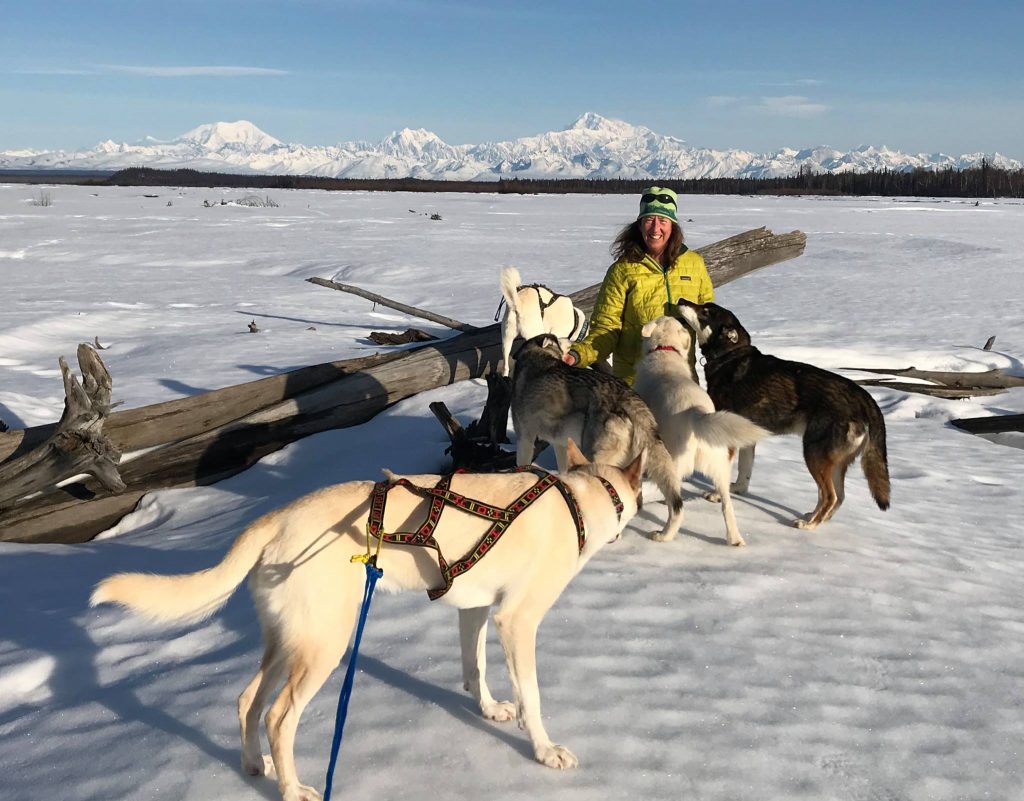
“So I have been on this diet, it will be, three weeks tomorrow. I stopped skiing for a total of five days. Anybody who knows me, knows that the number one thing I like to do, is to ski, every day, outside, with my dogs. And now, I did something called ski walking. No poles. Just going around my lake, and I definitely have not had the lung pain that I had initially. Much less pain. I do still have the stone in my chest.”
One of the characteristics of the coronavirus is that some people are asymptomatic while they have the disease. So some Alaskans might not even know that they had COVID-19. But with warmer days ahead, avid outdoorsmen may want to think twice before taking on too much, too soon. Doing so, could aggravate recovering heart and lung tissue.
Laura plans to take it easy this spring and is not planning on pushing herself. For now, she’s found a balance and is getting out to ski short distances. She’s also begun a rehabilitation program to try to rekindle her sense of smell. And she’s staying hopeful.
“The positives , I guess, of this are, I learned I could actually give up chocolate. I’m going to try to be on this diet for two months, and I’m on a low histamine diet, not a no histamine diet. So I just yesterday decided I just had to have my cup of tea in the morning. And that’s all I have, one cup of black tea. I have to say to my self, alright, today’s a good day, you know, Maybe tomorrow’s going to be a bad day, but today I’m feeling OK. And that’s a good thing,”