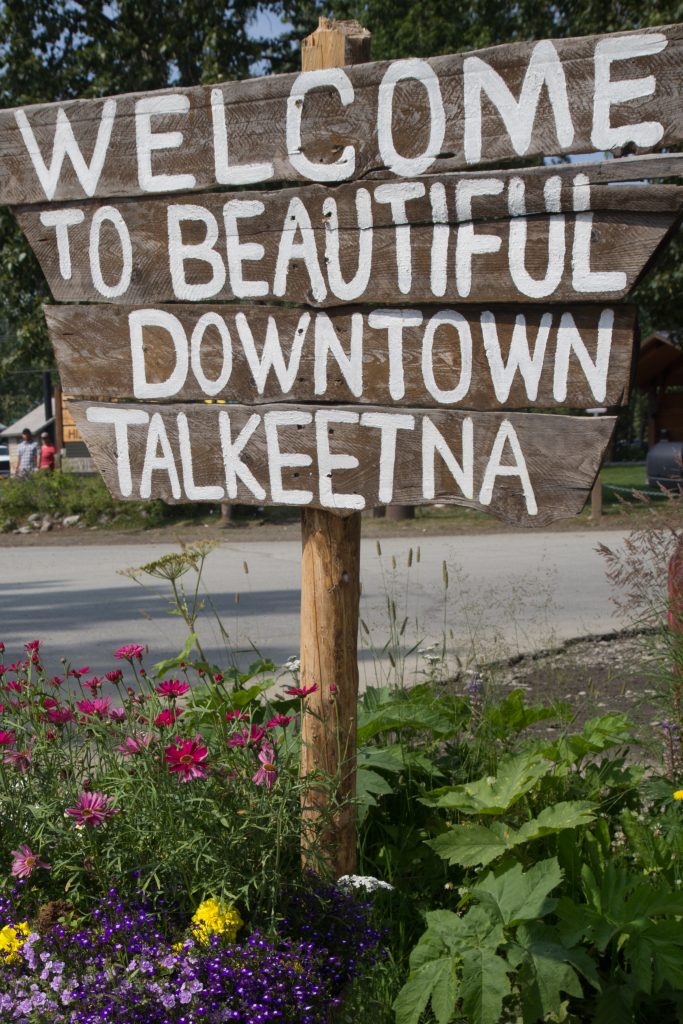
In 2020, Covid-19 shook up the local economy. Early in the year, businesses shut down. Last summer saw a partial re-opening, and this year things may appear like they’re “back to normal”. But as Colleen Love reports, it’s not all business as usual.
It’s summer and the streets of Talkeetna are full of pedestrians. It’s not unusual to see crowds of tourists wandering Main Street. But usually they arrive by way of cruise ships or in an RV that has travelled through Canada. Since both the cruise industry and the Canadian borders have been somewhat closed down this summer, I wondered where are these tourists were coming from and how they might have affected business in Talkeetna.
“It’s very busy. I would say much busier that anybody expected.”
That’s Anita Golton. She owns the Flying Squirrel Bakery, about four miles from downtown Talkeetna.
“I haven’t had time to really look at the numbers, but maybe 25% busier than two summers ago….before Covid.”
She’s noticed a difference in the clientele this year.
“Flying Squirrel is kind of geared toward independent travelers and in a normal summer most of them would be on buses or coming off the train. This year everyone is an independent traveler, maybe 90% of the travelers coming to Talkeetna are coming in a rental car.”
Normally, an increase in customers would be great news. But Golton says there haven’t been enough workers to meet the increased demand. She explains that she’s not the only restaurant with this problem.
“I see all of the restaurants adapting and doing their best to make it work. And so I see that most businesses have decided to close one day a week or open an hour later or some adaptation that makes it work for their business, so that the staff that they do have is healthy and happy and able to keep this going for another two months.”
The conversation leaves me wondering why there is a shortage of workers. So I spoke with DeAnn Autrey, a local realtor, about the housing market.
“It is busy. I was just kind of looking at some numbers and overall our listings here in Talkeetna are up 40%. Our sales are way up too. We are up 52% over last year.
But when I asked her who was buying these homes, she responded with this:
“I think a lot of people that were maybe living in Anchorage full time, and both husband and wife maybe working full time, have kind of re-evaluated their lives and they like what Talkeetna has to offer.”
And it’s not just folks from Anchorage buying Talkeetna homes.
“We’re definitely seeing an influx of out-of-state people moving up to Alaska. I currently have nine pending sales and out of those nine, three of them are from the lower forty-eight.”
According to Autrey, not all the buyers have plans to move in. She describes what else is driving the housing market.
“They’re looking for homes that they can Airbnb when they’re not using them and then when they want to come up and use them they will just plot those dates for themselves.”
But Autrey says, that also means fewer long term rentals and fewer housing options for local workers.
Besides housing, another service many workers desperately need is childcare. Sarah Stevens, director of Sunshine Station Childcare explains some of the challenges she has faced re-opening after Covid.
“It kind of went back to business as usual except that we don’t really have any employees.”
Stevens says most of her staff left during the pandemic. She’s trying to juggle keeping the center open with limited staff.
“People need childcare, but I’m having to turn parents and kids away to stay in ratio because I can’t staff it.”
The state of Alaska mandates a staff to child ratio, so without daycare workers, Stevens can only accept a limited number of children. Stevens also feels the J-1 Visa situation is contributing to the shortage of local workers.
“I definitely think we don’t have as many seasonal people as we normally do. There aren’t any visas this year, and so the lodge is taking up a lot of the local people. And now everybody’s just trying to work seven jobs.”
The J-1 Visa is a cultural, international exchange program. Hotels and restaurants often participate by bringing in workers from other countries. They provide housing and employment on a temporary basis for the visa holders.
In June 2020, President Donald Trump placed restrictions on the J-1 program. Those restrictions expired on April 1st, but the program has been struggling to catch up and process the visas. On April 30th, the U.S. Department of State released a series of tiers for priority processing of the visas. The J-1 employment visa was in the bottom tier.
With a smaller staff, wait times for food are longer. Golton says that customers are responding with patience.
“I think a lot of people come from bigger cities where they’re used to waiting in line for things. We’re used to something kind of different in Talkeetna, where lines seem out of the ordinary. But overall, people have been very, very patient and grateful that we’re open. And if you smile at them, they smile back.”
Tourist season will be winding down soon. The fundamental changes brought by the pandemic may or may not be long lasting. One thing that Talkeetna residents can count on is winter. Winter means time to rejuvenate and prepare for whatever…happens next.