Chair of the board for the Matsu Fish and Wildlife Commission Mike Wood came to Alaska to do a semester course with the National Outdoor Leadership School and never left. He lights up when he talks about the Alaskan Range.
Spent the first half of my life trying to climb it and the second half of my life mucking around in the mud of it.
The Susitna River starts at Susitna Glacier and flows southwest to Cook Inlet, which is a 27-mile flight from Anchorage. It’s 313 miles long and Wood lives up along it in a cabin he built with his wife, Molly.
It’s navigable 85 miles from its mouth all the way to Talkeetna. Wood says he doesn’t even know the last 100 miles, and doesn’t have any plans to go there until his last days.
Yeah, you know some people jump on an ice flow. I might just get in a canoe and go through Devil’s Canyon and let it sweep me out the other end.
Co-founder of Susitna Salmon Company—a small fishermen-seller direct setnet operation—Wood lives at the base of the river every summer for five weeks.

So, he’s very in tune with the strips of mud that appear along the shore before the oceanic tide washes in, with the way that fish populations ebb and flow, and the exact spots where beluga whales and seals like to feed.
And I mean it’s the fourth largest king salmon run in the state, you know? And it’s so wild still, and it’s incredible. Only two bridges cross it in the whole watershed, and that’s up on the Denali highway and on the parks highway.
This river is just not covered culturally in Alaska, despite the fact that there is no larger river that people live by. But it’s the most recreated river in the state.
People fly over it and build cabins all along it. You just can’t drive to many parts of it. Unlike other popular fishing spots in Alaska, salmon run numbers are not updated regularly.
The Su is like the lonesome stepchild of Cook Inlet.
It’s the 15th largest river in the U.S. measured in volume at its base. It runs along the west side of the Talkeetna Mountains, past Talkeetna. It receives water from numerous other rivers—including the Deshka, Talkeetna, Yentna, Oshetna, and Tyone.
Over the past decade, Wood has been a strong voice against the proposed Susitna Hydroelectric project on the Susitna River. During his campaign, he became familiar with the watershed. He says there are sockeye salmon everywhere.
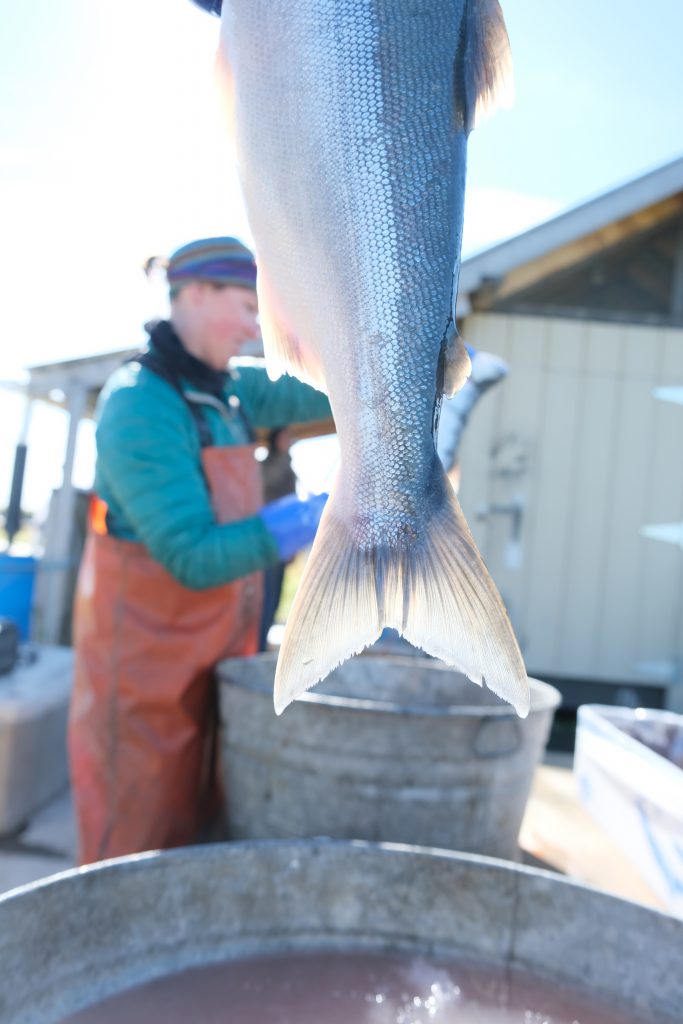
During the Su hydro studies we were camped out in these sloughs all the time. You know, just hanging out. And, at night the water would be boiling from fish spawning beside the tent. Nobody could see them because they were under murky water.
The fish spawn way up in creeks. Lakes are the typical spawning grounds for sockeye, but there are in-river spawners. They spawn in side channels, and look for places where there is good gravel and groundwater so their eggs won’t freeze in the winter.
Hence, the anadromous part. They come in from the salt, they spawn, and then the young ones are born in the fresh and have to adapt to returning to the salt.
The area where the dam was proposed was what Wood calls the bread basket of Unit 13 and all of the moose and caribou for Mat-Su and Anchorage.
And a lot of people don’t understand what a load-following dam would do to a river.
Wood says that the whole ecosystem relies on the active watershed—the glacial run-off and incoming tides from the ocean. It’s a vibrant and critical fish and wildlife habitat.
This place is for me still like a whetstone where you can keep your edge sharp. I just love grinding away in it every day.

Wood says the river has given him so much that he’s committed to paying attention and giving back to it in the ways he can.
For KTNA, I’m Nell Salzman.