Talking about the weather has probably been one of the most common conversations between humans over the years.
More recently, talking about climate has become a hot topic. Climatologist Brian Brettschneider has talked about climate with all walks of life. When asked about his conversations with various people, he says pilots are a unique source of information.
“It’s an interesting question because, as someone who interacts with the public quite a bit, I hear information from people’s recollections, and quite often it’s wildly inaccurate.” He adds that aviators’ observations are often different, however. Brettschneider says, “One of the exceptions to that is the pilot community…especially your old-time bush pilots who have been flying around for decades.”
Dr. Brettschneider emphasizes the value of pilots’ birds-eye-view observations.
“[Pilots] really have a special perspective for noticing when things have changed over various time scales.”
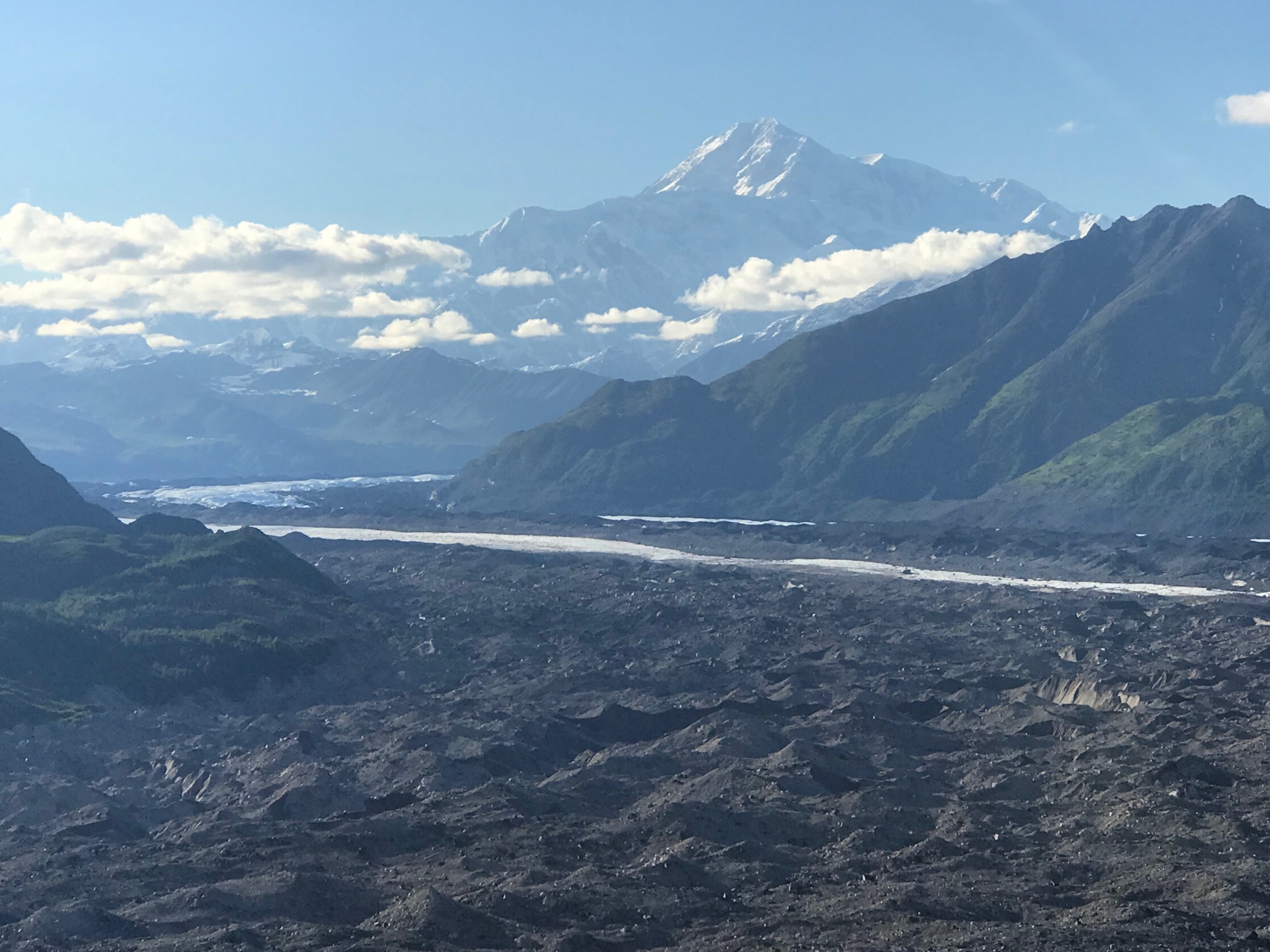
Long-time pilot Paul Roderick of Talkeetna Air Taxi has flown in and out of the Alaska Range for the past twenty-five years. He sees the greatest change in the lower glaciers.
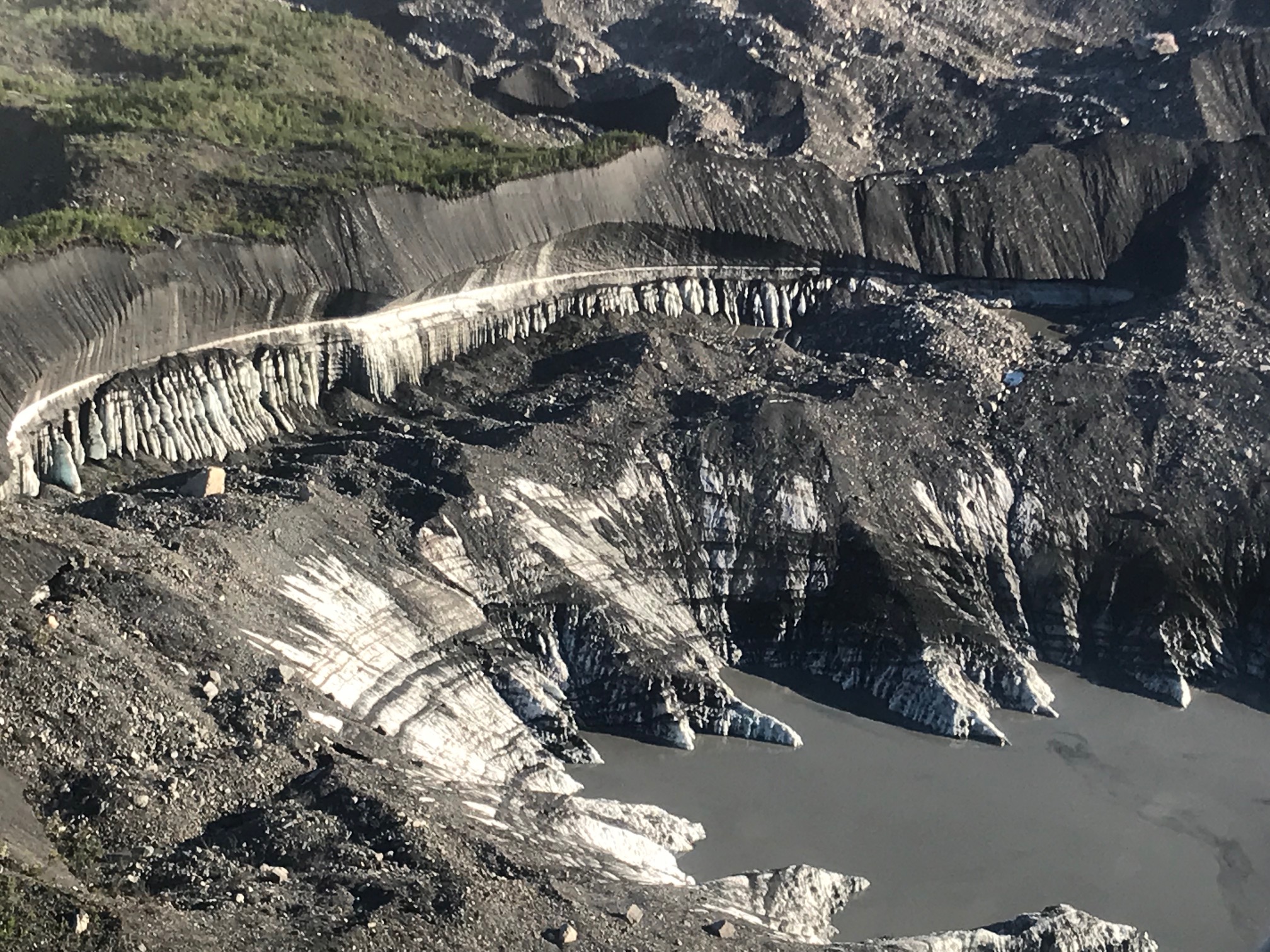
Roderick says, “Notably the biggest changes are the lower half of the glaciers, like the Kahiltna, Tokositna, and Ruth Glaciers are deteriorating at somewhat of an alarming rate. All the side creeks that flow into the lateral margins of the glacier are collapsing.”
Roderick says this deterioration is a recent development. “Just ten years ago…it wasn’t really occurring yet, because there was still movement of the lower glaciers and occasional surging.”
Roderick says that the lower half of the glaciers aren’t moving any more.
“You can actually see on the lateral margins a yearly recession rate, which looks to be anywhere from twenty to maybe forty feet annually, which is pretty big.”
The scientific community benefits from the observations of pilots, as well as photographs of the aerial perspective.
Dr. Brian Brettschneider emphasizes how important photographs are for documenting the visual changes on the glaciers.
“It’s hard to argue against a photograph. A photograph is a photograph. It’s a monument of time that really can’t be disputed.”
Another noticeable change of climate has been an increasing amount of summertime thunderstorms in
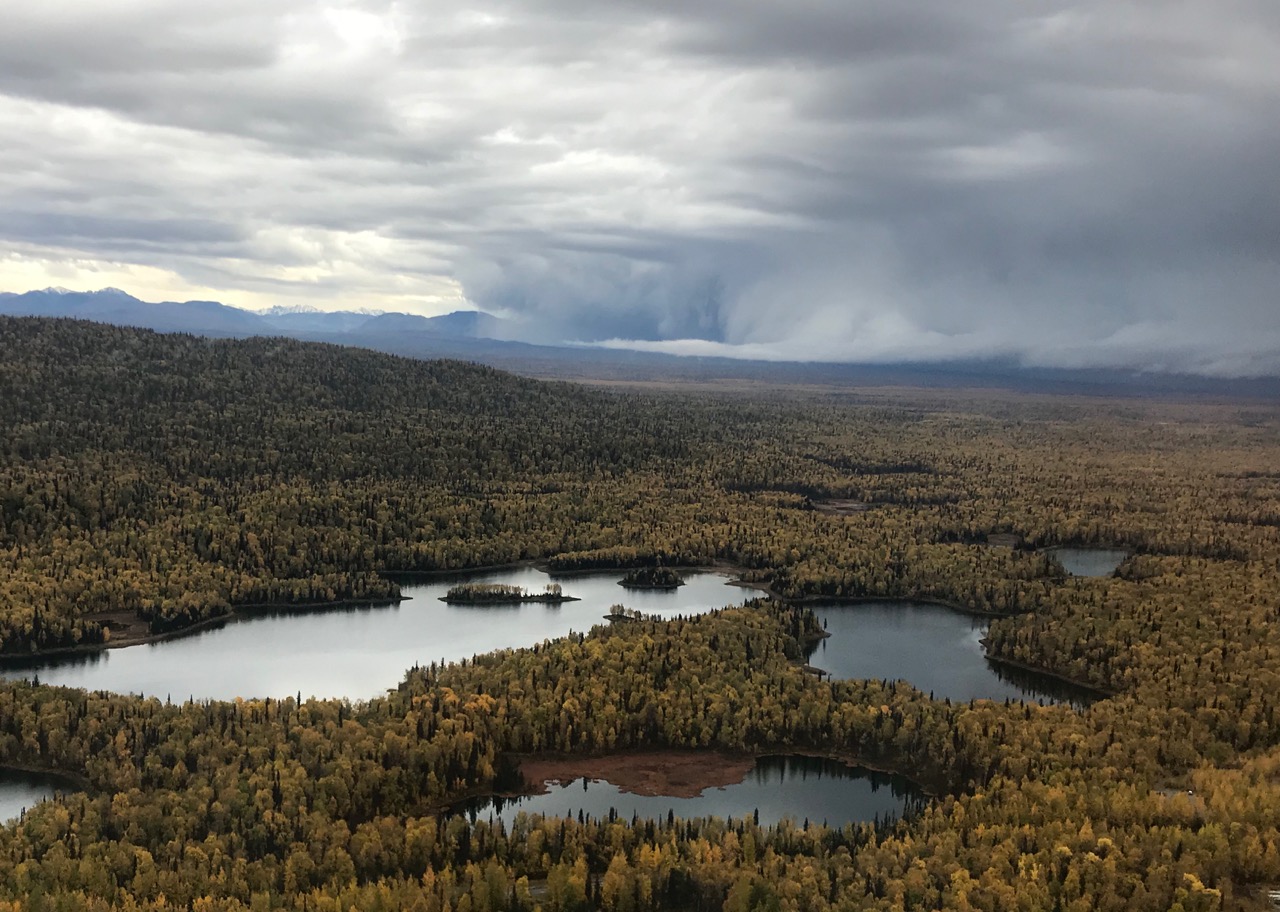
Alaska. Paul Roderick explains, “Thunderstorms have been pretty notable because…when I first got here…in the early 90s, it was rare. You might hear a thunderstorm in the distance, like in the Talkeetna Mountains. But now, we seem to get a few every month, most likely due to climate change.”
Roderick has seen a notable shift in frequency and intensity of storms over the last ten years.
As a climatologist, Dr. Brettschneider feels that people look to science to solve the problems of climate change.
“It can be easy to fall into the trap of thinking, ‘Well, science will come and save us….’ But sometimes, what scientists come up with–the solution–is, ‘Hey, everyone, you have to do something.’ It’s not that we will fix it for you. We will identify the problem so we can all fix it together.”
While discussing the topic of climate change can be troubling, it is an important subject to address in order to prepare and adapt to the upcoming changes in the Susitna Valley.