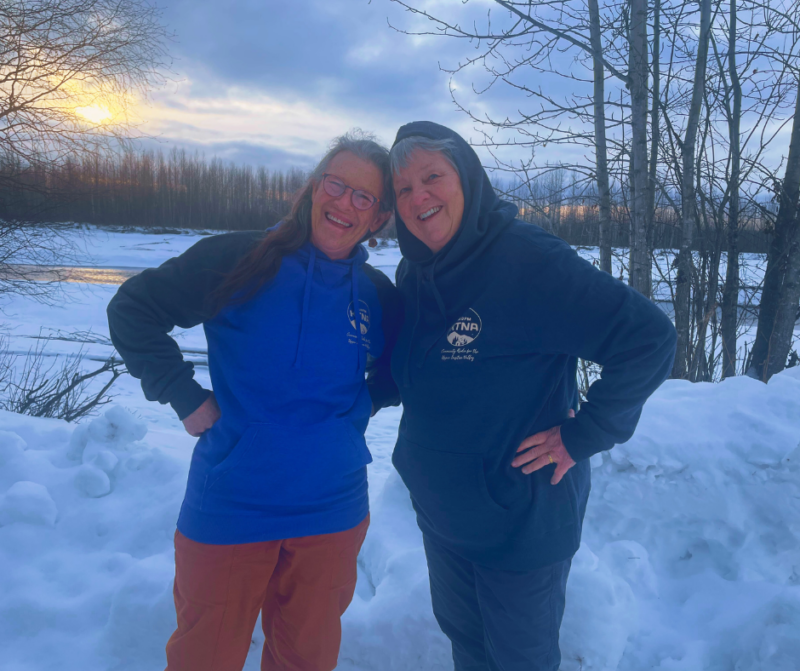
Brian Brettschneider is a research climatologist with International Arctic Research Center and University of Alaska Fairbanks. As a research climatologist, Brian and his colleagues have so many items to discuss on an unusually long list of climate abnormalities during the 2019 summer in Alaska.
KTNA’s Katie Writer spoke with Brian about this past summer’s standout climate events, melting glaciers in the Alaska Range, as well as what we can expect for this upcoming winter. What follows is the transcript of part of their interview.
Katie Writer :
In your longtime profession as a climatologist, do you think the conversation of climate warming impacts on Alaskans is getting any easier?
Brian Brettschneider :
Well, the discussion has certainly changed, particularly with this warm summer. A lot of people kind of came up to me either, you know, formally or informally and said,
“Hey, this has been a great summer, but then at the same time, …this is really bad for Alaska and for the long term.”
It really highlighted to people, how much things have changed, and in many ways, what the future might look like. And that was what, you know, the exceptionally warm temperatures.
Part of that was also the tremendous smoke that occurred with the fires.
Katie Writer :
What are the top three weather climate abnormalities of this past six months that surprised you the most, Brian?
Brian Brettschneider :
Well, I don’t even know where to begin. You know, when myself and some other people, you know, we come up with monthly and seasonal summaries and sometimes, we always try to come up with, you know, kind of some highlights to point out, that will be attention grabbing and sometimes we kind of struggle to say,
“Well, was there anything really noteworthy, but this summer really was off the charts. You know, without question, the tremendous warmth, particularly in the month of July, statewide. You know, we broke the record for the warmest Alaska by a wide margin. We literally are the difference now between this July and then the second warmest July is about the same difference as the second warmest and the 20th warmest. So, normally records are broken by tiny slivers, but to absolutely smash a statewide record. And we have data that goes back, you know, at least 100 years, and in some cases more than that. So it was really, really, really remarkable.
Katie Writer :
What other climate phenomena piqued your interest this summer?
Brian Brettschneider :
I would say the next thing is in the southern half of the state, the remarkably dry August, particularly south of the Alaska Range, there was a very sharp gradient. So, Denali Park, their wettest month on record, not just August or July, any month in a year …they had their wettest month on record. Yet, Talkeetna just a little bit to the south was in an exceptional drought as defined by the US Drought Monitor. So that gradient and then the exceptional dryness when it should be the wettest time of the year was really noteworthy. The individual daily records that were set at places like Northway, and Kodiak, and Anchorage and Bethel, all time records. And these are things that grabbed national and even international attention. I got calls from European news organizations to talk about these things, national news. Noted to people that, “Hey you grew up in the Arctic, we can have these kind of really exceptional temperatures. And then what does that mean for the future?”
Katie Writer :
What do you have any projections of what we can expect for this winter?
Brian Brettschneider :
I get asked that question a lot.
My answer is, knowing nothing else about the climate system, you should always assume it’s going to be warmer than normal. So when we say normal, they’re about a, the standard convention is to use a 30 year baseline period and say, okay, that’s a current snapshot of the climate. We’re actually warming so much faster than you know, we haven’t in previous generations, that that 30 years snapshot is already behind the times. It’s already reflecting a climate that was cooler than it is now. So, we should always expect it to be warmer than what we what we define as the climate normal.
Katie Writer :
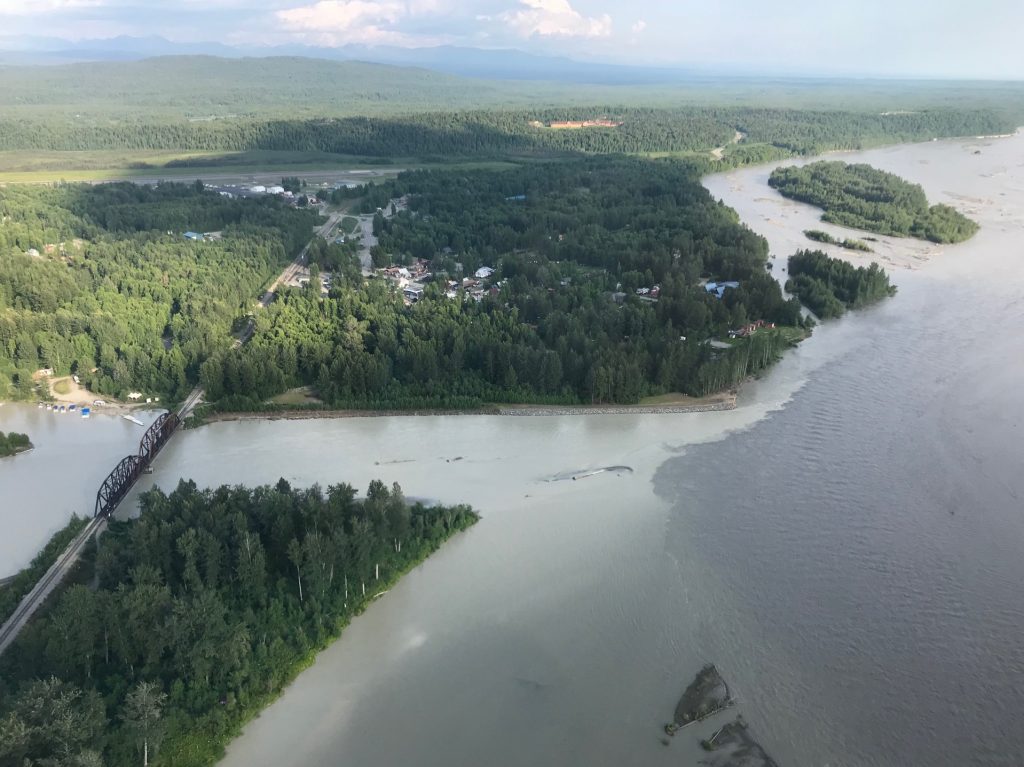
You know, one thing that we have nearby is of course, the whole Alaska Range with the multiple glaciers and the glacier melt off was just huge this past summer. Our rivers were up even during the drought the rivers were bank full. Talkeetna was even, you know, on the edge of being, you know, worried about flooding from just no rainfall, but just glacier melting. Do you have any thoughts on this trend of the glacier melt off?
Brian Brettschneider :
Well, you know, warm summers and glacier melt, unfortunately go hand in hand. You know, in many cases, what really can make an Alaska summer warm, is the lack of cloud cover. And so that’s exactly what we have this year. We had a record low cloud cover throughout the entire state in June and July. And that sun, just relentlessly beats down on the glaciers.
These glaciers are right on the edge of, you know, growing or receding. But once they start receding, it’s really hard to turn that around.
Katie Writer :
Scientist have documented that Alaska has lost more glaciers than any other region in the world in the last fifty years.