



Agriculture: Peonies in the Upper Valley
Peonies are a growing business in Alaska. Ample sunlight and moisture make for good growing conditions, and more farmers are looking at the flowers as a profit-maker. KTNA’s Phillip Manning
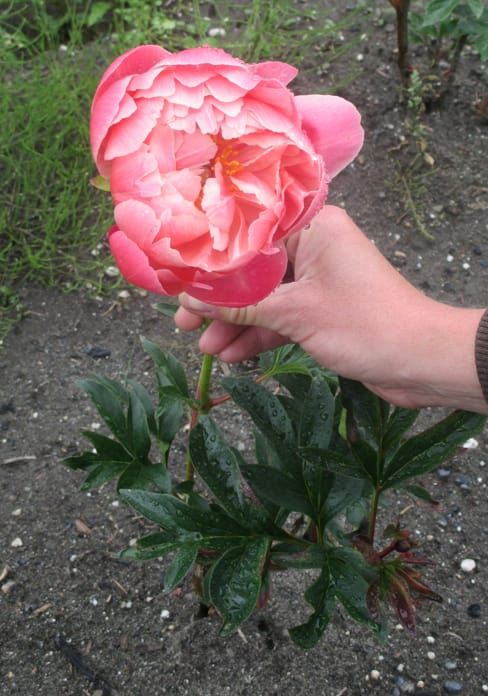
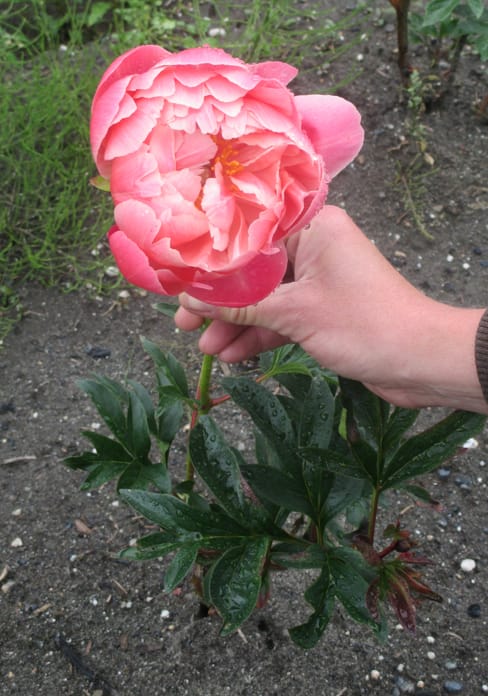
Peonies are a growing business in Alaska. Ample sunlight and moisture make for good growing conditions, and more farmers are looking at the flowers as a profit-maker. KTNA’s Phillip Manning visited a family farm in Trapper Creek, and has this story.
When most people hear “Alaskan exports,” they think of things like gold, salmon, and oil. Now, however, some Alaskan farmers are capitalizing on the timing of the growing season to cash in on a new market, peonies. Peonies are a family of flower with somewhere between twenty-five and forty species. The blossoms contain many petals, and can open to be quite large, with the flower of many species averaging six inches across or more. In Alaska, some can get even larger.
“They were as big as my head!”
That’s Pat Holloway. She is the Professor of Horticulture at the University of Alaska, Fairbanks, and she is describing some of the flowers in her own garden this summer. Professor Holloway is also a big part of the reason that farmers are growing peonies in Alaska. She says she spoke with a flower industry expert nearly fifteen years ago, who told her that Alaska is in a unique position to grow peonies commercially.
“Ours bloom in July instead of May, where most people have peonies. He says to me, ‘If you look in to the world’s markets on cut flowers, nobody has peonies blooming in July.”
Armed with that knowledge, Professor Holloway obtained grant money to start trying to grow peonies in Alaska. Because the growth was being carefully documented, Holloway says she got an unexpected phone call two years into the experiment.
“In 2003, I was in my office, and I got a phone call. This gentleman introduced himself as a flower broker from London, and he wanted me to send him 100,000 stems!”
As it turns out, flower distributors are very eager to expand the period in which they can sell peonies. That particular broker had been searching the internet for late summer flowers and found Professor Holloway’s records.
“My little paper that was on the internet was the only resource that had a calendar in it, and he goes, ‘You’re it.’ He says, ‘You have them.’ I just sat back going, ‘Oh my gosh, there is something to this.’ I was just so dumbfounded.”
Part of the reason for year-round demand for peonies is how they are used. Bryan Hoffmann, whose family grows peonies in Trapper Creek, says that peonies are in high demand around the world for one specific occasion.
“It seems to be bridal bouquets.”
Research shows that wedding budgets overall are going up. Part of that cost is fresh flowers. Bryan Hoffmann says that the trend is looking good for peonies.
“They’ve done a lot of research into how much money is spent on flowers, and it’s a lot.”
Bryan Hoffmann grew up on a farm in Wisconsin. He works in Prudhoe Bay, now, but says he would like to find a way to make farming his full-time job again. Marilyn Hoffmann, Bryan’s wife, says that the family discovered peonies as an Alaskan crop as a matter of necessity.
“Our first year moving up here, all three acres of this was hay, and we found out that our son was allergic to hay, so we had to figure out something different, so Bryan did research on peonies.”
Part of that research that Bryan Hoffmann saw was what Professor Holloway had produced. Now, the family grows three acres of peonies. It’s a learning process for the Hoffmanns. Marilyn explains how cutting the flowers is different in Alaska than anywhere else, because florists want them while they are still in bud stage .
“You’re out here four times a day. You’re constantly in the field, checking buds. Last year, even from midnight–which would be my last cut–to six in the morning, I would have so many blown that I couldn’t send to the distributor because they were already too far open.”
The Hoffmanns are far from alone in peony farming in the area. The Mat-Su Borough recently designated itself as the peony capital of Alaska. Bryan Hoffmann says farmers in the Valley are all working on the best way to grow the flowers, and often share information on what’s working for them within the relatively new industry.
“Up here, everybody’s still trying to figure it out. There’s a lot of communication between farmers in the area. We talk to a lot of farmers, ‘Hey, what’s working for you?…We tried this, it didn’t work for us,’ A lot of information sharing.
Bryan Hoffmann says one of the reasons that farmers feel comfortable sharing techniques is that Alaska has a corner on the market that it is nowhere close to exhausting.
“There’s such a big demand; I don’t know that Alaska will ever exceed the demand. Once you flood the Lower 48, you still have Europe…you still have the rest of the world.”
The supply in Alaska, and on the Hoffmanns’ farm is continuing to grow, but it still has a long way to go before the hundreds of thousands of flowers that distributors, florists, and wedding planners are asking for can be exported. This week, flower distributors were touring farms across Alaska, and, by all accounts, they are impressed not only with the extended peony season, but also the quality of flowers that grow under the midnight sun.
Read More

Su Valley Voice: KTNA News Department
In this episode host Trisha Costello was joined by all three of the news producers that make up the KTNA News Department.
Here's how the Upper Susitna Valley's local precincts voted in statewide and district races
According to unofficial election results from the Alaska Division of Elections, the majority of Talkeetna residents voted in favor of Democrat Mary Peltola in the U.S. Senate Race

Six Minute Science 11-7-26, Episode 59 - Alaska Grown Grains
Alaska Grown grains like Sunshine Barley are helping to build Alaska's food resilience and provide economic opportunities for local Alaskans. UAF Institute for Agriculture, Natural Resources, and Extension Director Jodie Anderson talks about new grain varieties.
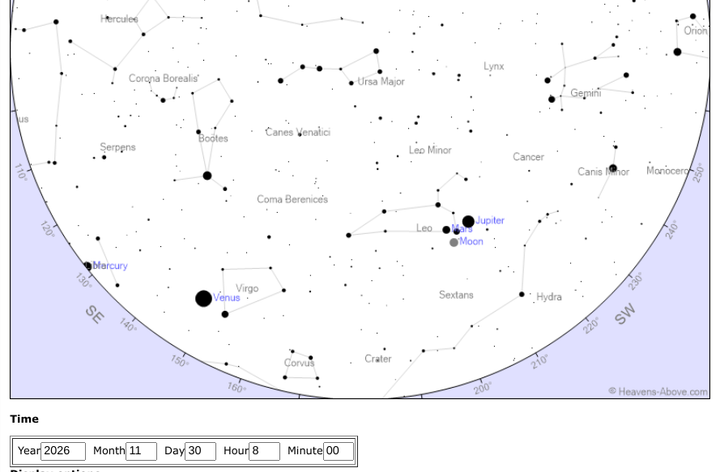
StarDate Susitna 11-8-26, by Kathleen Fleming
November can be a wonderful month for star gazing, and Kathleen Fleming wants to tell you about the night-sky events that may be visible in our Upper Susitna skies.