



As Black Bears Attack Domestic Animals, Locals Look for Answers
In recent weeks, local residents have been reporting a high number of encounters with black bears. Lately, local Facebook groups have seen multiple posts about black bears attacking chicken coops,
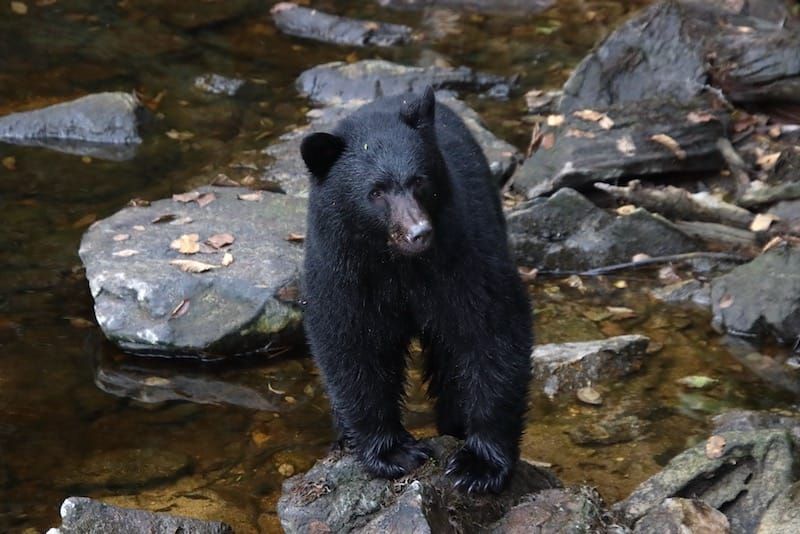
In recent weeks, local residents have been reporting a high number of encounters with black bears.
Lately, local Facebook groups have seen multiple posts about black bears attacking chicken coops, ducks, and in one case, a sheep. While black bears often feed on salmon and berries, Alaska Department of Fish and Game Assistant Area Biologist Gerrit Van Diest says they do occasionally attack domestic animals.
“It’s not that unusual to see them…trying to find chicken coops or something like that….They’re going to find any available resource or any food resource that they can. [We] haven’t gotten a ton of reports of them going after livestock—as in sheep or something like that. So, that’s not super common, but, like I said, they’re going to going to try to get any food that they possibly can.”
Van Diest says this time of year, black bears are usually transitioning from a salmon-based diet to foraging for berries. He acknowledges that some of the salmon runs have been low, but says the pink run is expected to be fairly strong.
But why are the bears coming into locals’ yards more often? Van Diest says there could be a variety of factors at play. I asked him if increased development could play a role. Van Diest says that’s possible. He said areas like Eagle River, which is expanding quickly, have seen an increase in bear encounters.
“As those areas are getting more developed, there’s going to be more bear interactions as we’re learning to live together.”
Van Diest says increasing numbers of chicken and duck attacks could also be due, in part, to how many people are raising them. In recent years, more Alaskans have begun raising chickens and ducks. He says bears may be adapting to that trend.
“Anecdotally, it seems like more and more people are trying to get some of those to have their own food source—get their own eggs. As those get more popular, bears are going to become more aware of that as a food source, too.”
The data backs up those anecdotes. In 2017, the number of chicks imported passed 100,000 for the first time.
There are likely multiple factors affecting the seeming increase in black bear encounters this summer. Van Diest says Fish and Game has not seen a significant increase in reports, but that could be because incidents are not making it to their desks. Incidents can be reported via the Fish and Game website or called in at 907-746-3622. Those reports can be used to identify trends going forward. Van Diest says in an emergency situation, it’s always best to call 911.
Read More

Trapper Creek Traffic Study Does Not Support Speed Reductions
Despite Monday’s fatal car accident in Trapper Creek, a recent D-O-T traffic study does not support slower speeds.

2026 Alaska Voters Guide
Early voting in the state’s November 2026 Midterm Election is underway in most of Alaska. Find out where to vote early.
Su Valley Voice for October 22, 2026: Willow Community
Host Trisha Costello talks with the Willow Library, the Willow Community Emergency Response Team, and KTNA News Producer Marion Chesterton.

Susitna Writer's Voice - October 19th, 2026, Acceptance pt 2 by Ruth Wood and Kathy Trump
This is the second of a new 3-part Susitna Writer's Voice featuring a story written and read by Kathy Trump and Ruth Wood.