



Borough and school officials discuss governor's budget proposal
As the Mat-Su Borough prepares to enter its budget process, many eyes are on Juneau to see what changes in the state budget could impact the Valley. Governor Dunleavy has
As the Mat-Su Borough prepares to enter its budget process, many eyes are on Juneau to see what changes in the state budget could impact the Valley. Governor Dunleavy has proposed a cut of over $1.5 billion in state spending in the coming year. Some of those cuts would have serious regional impacts, including municipal oil and gas revenues in the North Slope Borough, and the Alaska Marine Highway System in much of coastal Alaska.
Assembly Member Dan Mayfield was critical of the governor’s proposal, saying that it disproportionally affects municipalities.
“In my opinion, the governor has kind of declared war on municipalities and on the folks of who are most vulnerable in our society, and I think it’s a classic example of ideology taking priority over practicality.”
One cut that would hit the Mat-Su harder than other areas is the elimination of school bond debt reimbursement. In 2011, the borough agreed to a plan to issue bonds for school construction. Under that plan, the state would reimburse seventy percent of the bond obligation. The governor’s budget proposal zeroes out that reimbursement, which would cost the borough an estimated $18.5 million this year, and, if extended for the life of the bonds, could total over $200 million.
Borough Mayor Vern Halter says the change means the state would be going back on its agreement with the borough and the school board.
“This is the one issue that probably bothers me the most. To reneg on a partnership—and that’s what it is…a simple partnership—and, yes, everyone understood it could be one year funding. Oil company subsidies—oil company taxes are subject to one year funding, also.”
Halter also notes that, when the agreement was made, Mike Dunleavy was a member of the Mat-Su Borough School Board.
Another cut that would significantly impact borough schools is funding for the base student allocation. That formula determines how districts get most of their school operating funds. School Superintendent Monica Goyette says the cut, which would amount to more than $38 million, would mean an increase in the district’s ratio of students to teachers. In some cases, she says that could mean class sizes of fifty.

“I know we cannot physically fit fifty student desks in many of our classrooms; students would be sharing desks. We are also reaching out to the fire marshal to find out if we are legally allowed to have that many students in a classroom.”
While the cuts in the governor’s proposal are deep and sweeping, it is also only the first step in the state budgeting process. Many at Tuesday’s meeting, including Assembly Member Jim Sykes, point out that there is a lot more work to be done before the budget is finalized.
“I sort of see this as a worst-case-scenario. I don’t think the governor is going to get this budget, and I don’t think he’s expecting it. But, this is his first move, and it’s kind of a chess game in Juneau.”
If recent years are any indicator, that process will take a significant amount of time. That could present an additional problem for the borough, which must have its budget finalized in May and property tax bills mailed by the beginning of July. Assembly Member George McKee says he doesn’t see the state having a final budget by then.
“The folks down in Juneau are not going to have their money things fixed by [July 1st]. Anybody who believes that, I have a ferry I’ll bet we can buy back from the Phillippines, cheap.”
For now, borough and school district staff are proceeding with Governor Dunleavy’s proposal as a worst-case-scenario. That means hiring restrictions and cuts to travel and other discretionary expenses. The assembly is scheduled to review and begin deliberating plans for its own budget this spring.
Read More
Su Valley Voice: KTNA News Department
In this episode host Trisha Costello was joined by all three of the news producers that make up the KTNA News Department.
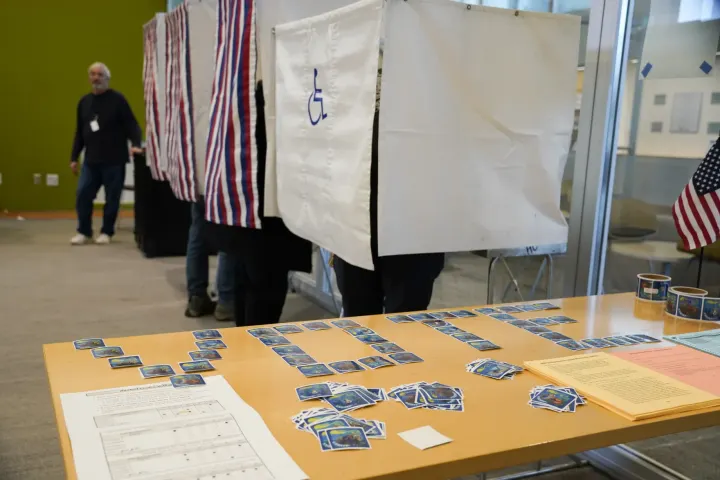
Here's how the Upper Susitna Valley's local precincts voted in statewide and district races
According to unofficial election results from the Alaska Division of Elections, the majority of Talkeetna residents voted in favor of Democrat Mary Peltola in the U.S. Senate Race
Six Minute Science 11-7-26, Episode 59 - Alaska Grown Grains
Alaska Grown grains like Sunshine Barley are helping to build Alaska's food resilience and provide economic opportunities for local Alaskans. UAF Institute for Agriculture, Natural Resources, and Extension Director Jodie Anderson talks about new grain varieties.

StarDate Susitna 11-8-26, by Kathleen Fleming
November can be a wonderful month for star gazing, and Kathleen Fleming wants to tell you about the night-sky events that may be visible in our Upper Susitna skies.