
Part one of the story of a hen who had a life-changing experience in the cold, and the start of her recuperation, with the hope of making a homemade chicken prosthetic using a computer program:
Like a bird on the wing, the direction of my life changed swiftly on February eleventh. It wasn’t planned. But when one has a compassionate heart and the Universe asks: “Are you willing?” the only answer is “Yes”.
Three days before I had been asked for advise about how to find a home for a hen who had-through a series of unfortunate events-lost a foot to frostbite. Her owner was in the hospital undergoing emergency surgery and the flock of chickens to which the hen belonged were now destined to go to a new owner- probably in the Spring. But this hen needed special help now. The flock was in the care of the owner’s friend, and I waited until she had a day off, then drove over to take photos of the hen so I could send them out to anyone who might be interested in the hen.
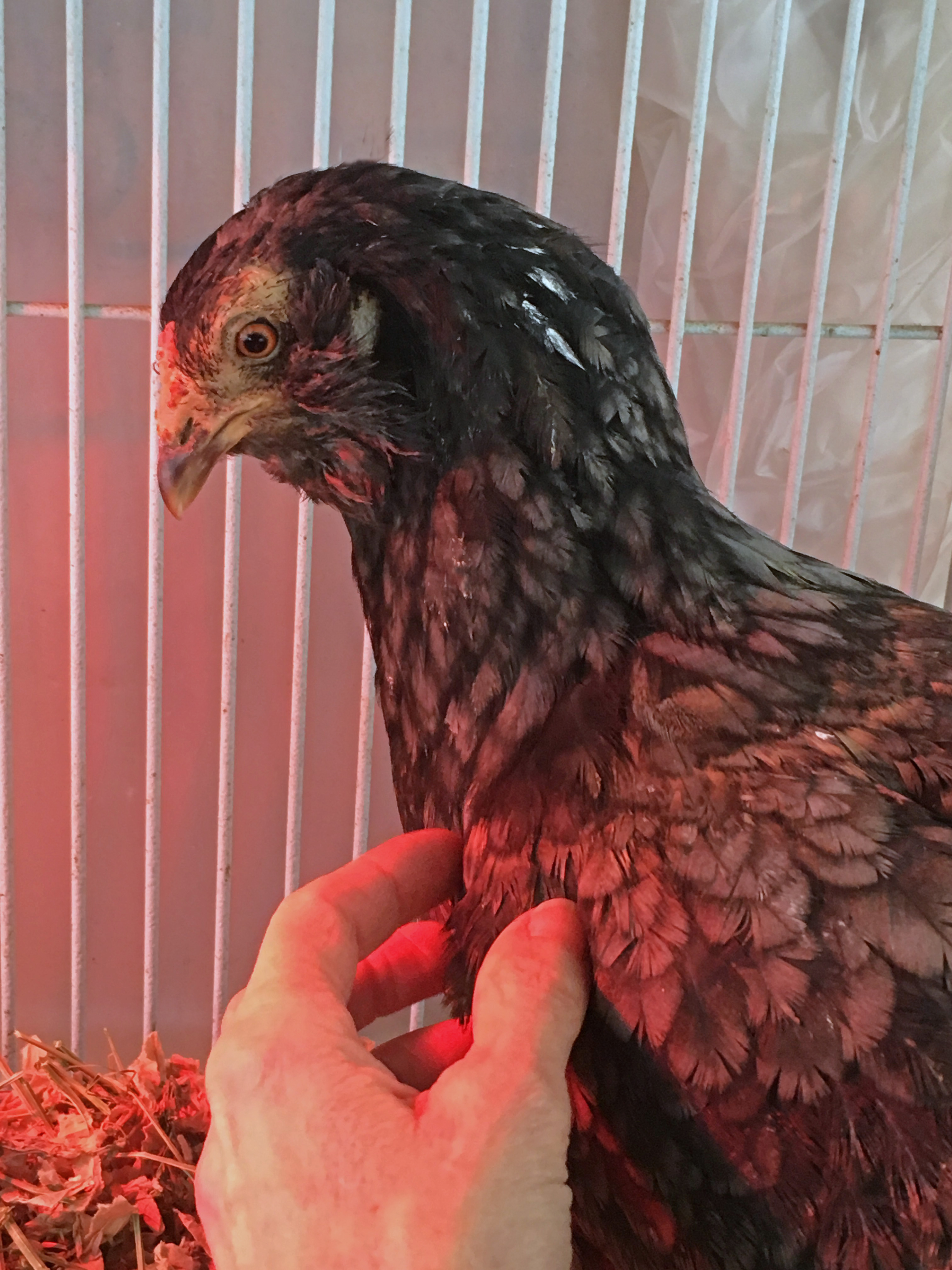
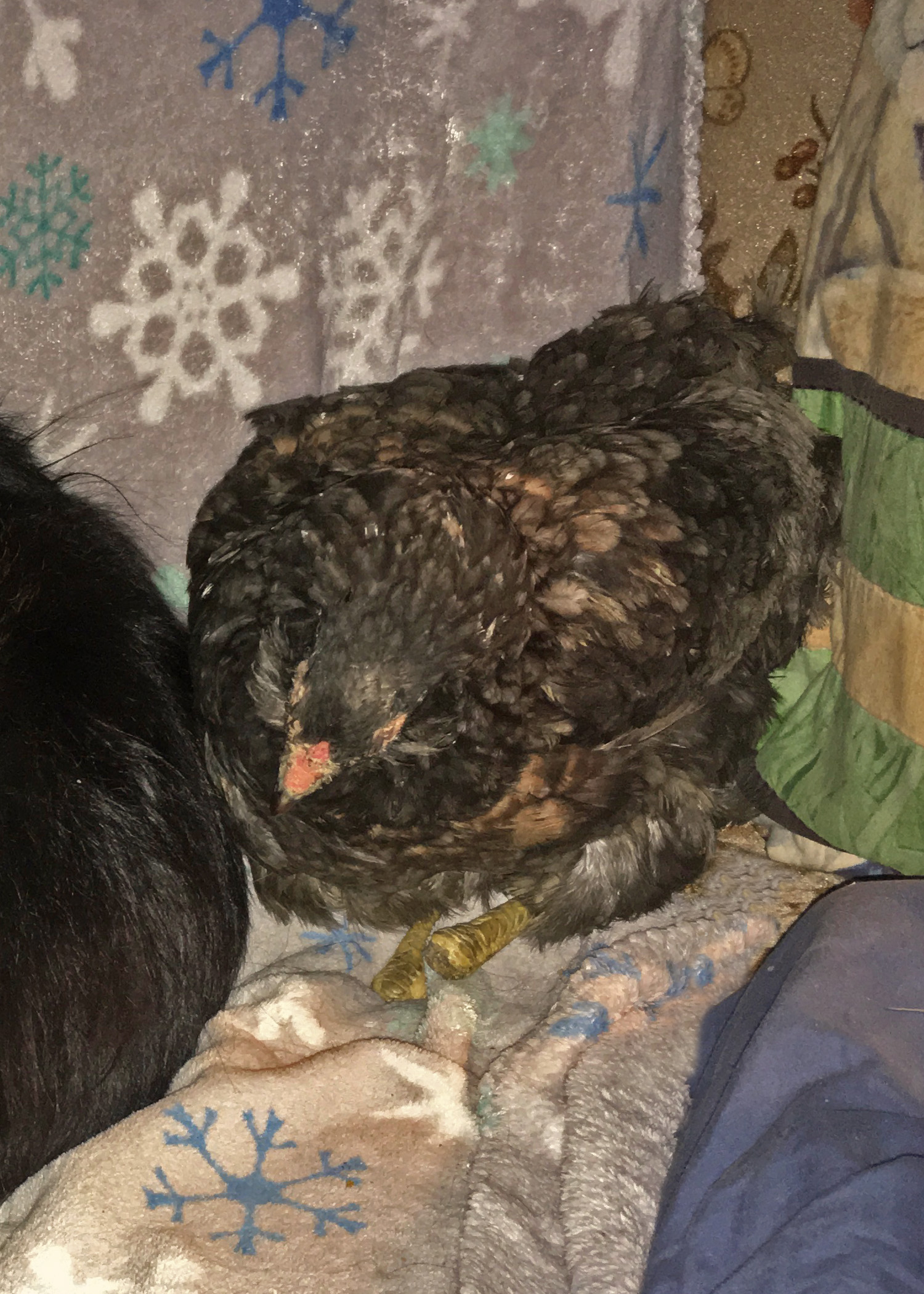
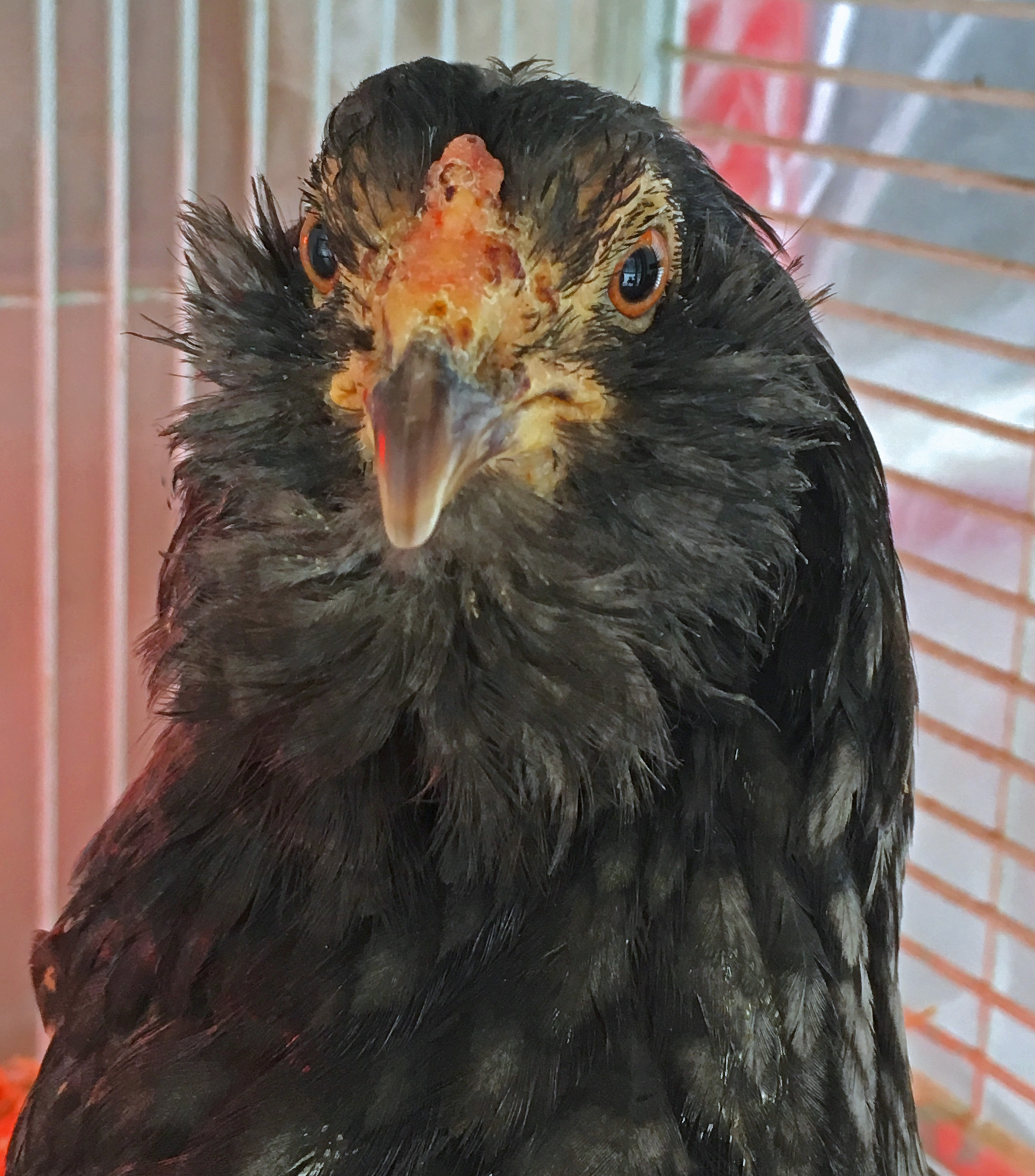
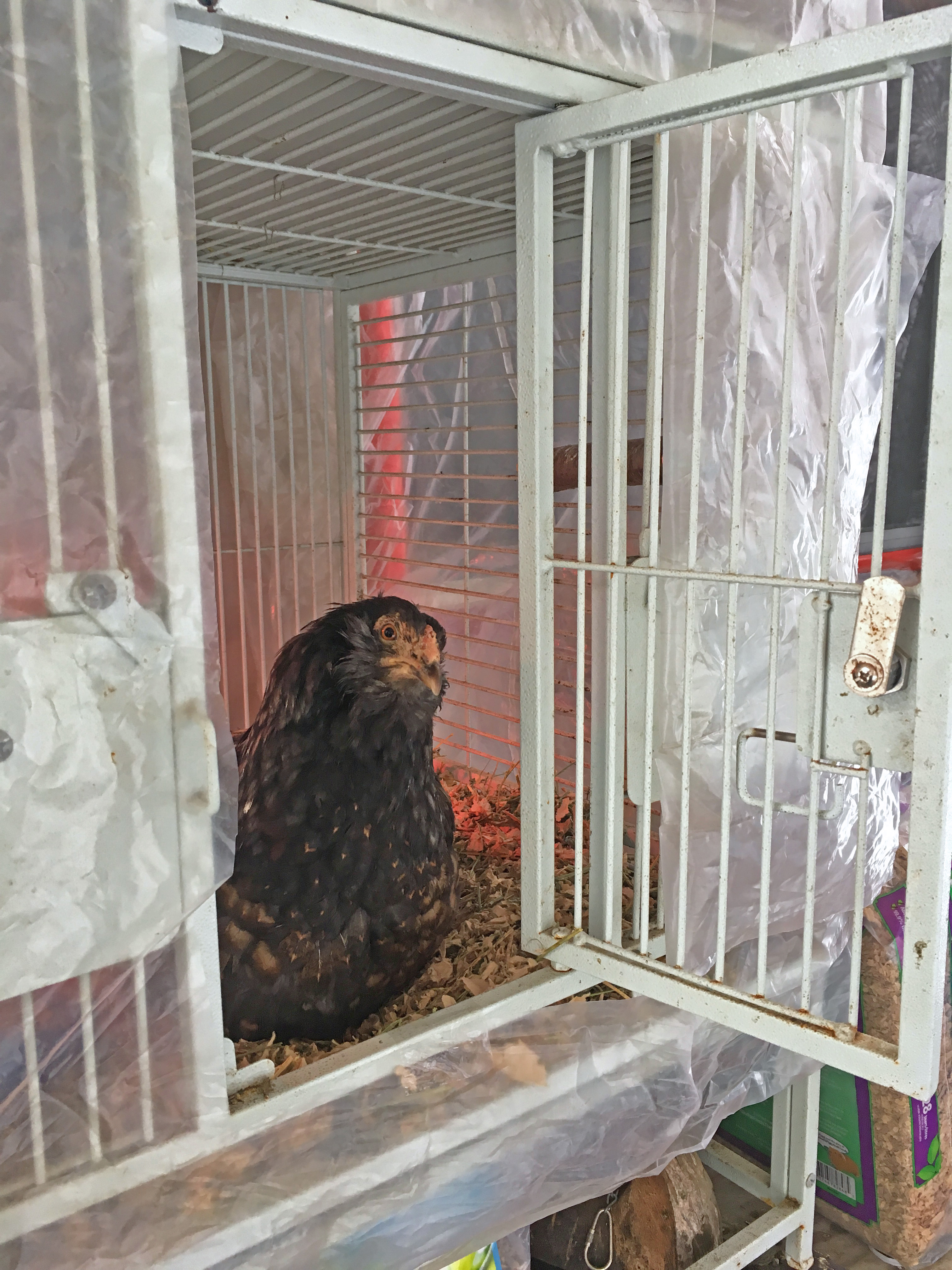
When I opened the hen house door, I found a wire cage just inside, keeping the hen separated from the rest of the flock. They had ostracized the hen and had been picking on her, so she had been kept separate for her own safety. I opened the cage door to take photos unobstructed by the cage wires. The black hen was crouched at the back of the cage and I spoke quietly to her. She was understandably nervous, and began to move away. Immediately I saw that she was missing both of her feet. My heart skipped a beat. There it was. I knew in that instant that I couldn’t leave her there. I had a hen already living in my cabin and I didn’t know how she would accept another hen coming into her territory, but I couldn’t worry about that now. This hen needed immediate help. The details would work themselves out.
I drove to the cabin and got my hen’s car crate and a blanket. I returned and went to the cage and lifted the hen out. There was nothing to her- she was starving, too. I carefully placed her in the crate, not knowing yet what condition her stumps were in. I wrapped the crate in the blanket in the car so she would be as relaxed as possible on the drive to the cabin. Placing the crate in my sled, I pulled her as carefully as I could down the trail to the porch. At the foot of the ramp, I removed her so I could examine her before taking her into the cabin. Her feathers were a mess. Apparently some of the hens in her flock had roosted on top of her cage and nothing was placed on top to prevent them from pooping on her. Dung was caked on the ends of both stumps. I pried off as much as I could, getting down to the scabs underneath. Her keel was sharp and protruding through her breast and belly. I could tell she was severely dehydrated. I didn’t see any dishes in the cage when I removed her, just a little snow and some grain in amongst the soiled straw. I knew snow was not adequate for a water source in the winter for poultry. It cools off their core temperature and they spend precious energy attempting to keep warm. Domestic animals and birds are not like the wild animals and birds who are designed to process snow and are acclimated to live in winter conditions. Chickens in particular originate from the temperate climes of the jungles of Southeastern Asia and Africa. They just don’t do well in snow country without extra help from human caregivers.
Before I had gone to get the hen, I had gotten my wire rabbit cage out from under the cabin. It still had some bedding in it from when it had housed my Dove’s offspring last year, but it needed much more to make a deep bed of support for this hen. I called my friend CW and asked if he would go get a bag of soft shavings and another of alfalfa when he got off work, and meet me at the artesian springs alongside the highway where I filled my water jugs. He said he would. Meanwhile, I opened a can of organic corn which I used as a treat for my Jorie Hen, and fixed up a dish of her Hen Feed and a dish of water in the cage for the new hen. Once set inside, I wrapped the blanket around the cage so Jorie would leave her alone. The hen ate and drank, and ate some more. Seeing that Jorie couldn’t bother her, I drove to the springs and met CW and collected the bedding. He had also brought meal worms and a treat he had found called “Hen Pecks”- a mixture of dead meal worms and sunflower seed pieces.
Back at the cabin I separated Jorie into the bedroom with a gate across the doorway, which has a drape instead of a door, and bedded the hen’s cage with several inches of mixed shavings and alfalfa. She smelled strongly of manure from the hen house, and I knew the sweet-smelling alfalfa would work the rank smell out of her feathers. And she would probably eat some of the small green leaves, which are rich in calcium. She had eaten everything I had given her before I left, so I re-filled her dish and added the meal worm and sunflower seed mix. She ate that too. She was quite wary and scuffled away from me whenever I reached into the cage. She knew she was vulnerable without feet. When I had re-filled her dishes, I wrapped the cage again and left her alone for the night so she could settle in.
I then got on the Internet, first going to the Backyard Chickens website and looking up ‘frostbite’. I learned that poultry can get frostbite when the bedding in the hen house is soiled and the temperature gets warm enough to cause the bedding to be damp. If the chickens don’t have a clean, dry place to go, their feet become damp. Then, if the temperature drops and everything freezes, the chickens are in danger of their feet freezing as well. Frostbite can set in, and after that, gangerine can spread though the affected limbs and then the body sloughs off those limbs to prevent the infection from spreading. This can happen with combs and wattles, as well. But feet are particularly vulnerable because of damp bedding.
In January there had been a week or so of temperature fluctuation where it had climbed into the mid thirties during the day. Then the temperature had dropped again. This would have created that condition in the hen house. The owner of the flock was struggling with serious health issues and was not available to clean the hen house and keep it in dry bedding. Somehow, only this hen had been affected. I shudder to think of the pain this hen endured in the process of loosing her feet.
I contacted several people, seeking advice. This was my first experience dealing with a bird without feet and I wasn’t sure what to do for her. I found links to Veterinarians who work with birds. I contacted two in Alaska who are general practitioners. One is in Fairbanks, the other in Haines. I emailed friends who have pets and asked for advice. It was late and I didn’t expect replys until the next day. At one am I finally called it quits and went to bed.
The next day I cleaned the big cage on the porch where my Doves had gone out to spend the warm summer days last year. I bedded it deeply with the shavings and alfalfa and installed a heat lamp. A breeze had sprung up, so I found a sheet of plastic and wrapped it around the outside of the cage to help hold in the warmth from the heat lamp. I placed the food and water dishes inside and cut flaps in the plastic over the two doors. I brought the hen out and carefully put her inside the cage near the heat lamp. She immediately began fluffing the bedding, then moving over to the dishes to have her breakfast. She was acclimated to be in the outdoor hen house, and she had gotten a bit overheated inside the cabin. Now, out in this cage with the heat lamp nearby, she felt more comfortable. She watched the little birds visiting my feeders on the porch. It’s always a bustle of activity, between the birds and squirrels, and the hen seemed satisfied to settle down and watch.
She was skittish through the day and moved away whenever I brought food to replenish her dishes. Late in the afternoon she finally let me gently stroke her feathers without moving away. I could see that she was nervous, but I considered that a good first step in building our friendship.
Meanwhile, the replys to my emails began to arrive. I had written to the two Vets in Alaska, and – to my delight – I heard from both of them. The one in Fairbanks didn’t have much to offer, but the one in Haines wanted to meet the hen and assess her situation.
CW has a 3-D Printer, and he had also been busy doing some research. He had discovered links to people who have been doing work with making prosthetics for birds and animals. Including ducks and chickens. The birds had lost one or both feet in dog attacks or frostbite or other hardships. People had been experimenting with making different kinds of prosthetics with the 3-D Printers with surprisingly good results.
The Vet in Haines said she had a 3-D Printer at her Clinic and she was in touch with a Vet Outside who had done some work with printing prosthetics for animals. She had sent word to him and was waiting for a reply as to whether he could send a pattern for prosthetics for the hen. Meanwhile, she wanted to examine the hen’s stumps to see if they were capable of supporting prosthetics. She would be coming to Anchorage sometime after February 20th, if I could make the trip to meet her there. I emailed back that I could.
I will end the story here, for now, of the hen, whom I named “Jem’- a diamond in the rough. Part two will follow.
SWV, KTNA
Robin Song,Natural Observations
February, 2019