For this next Susitna Writers’ Voice, Kathleen Fleming produced a timely StarDate Susitna. Topics include: faint objects, planets, the moon’s social schedule, winter solstice, and the next moon-over- Denali photo-op.
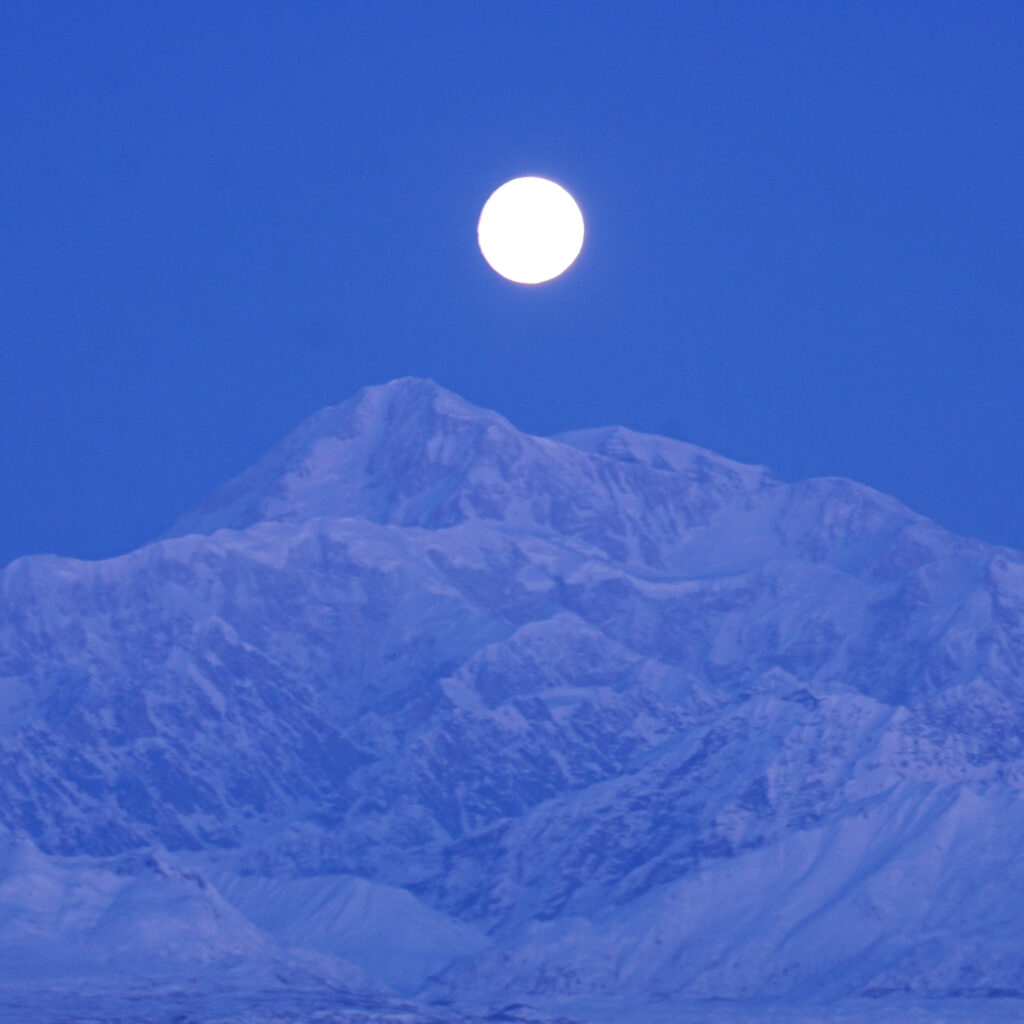
Brian Okonek took the below picture of the Moon over Denali on Jan 23, 2024, 9:17 AM. (Kathleen has edited the photo for posting on KTNA) Brian’s perch is a bit north and east and at a higher elevation compared to Kathleen’s place, so the timing and moon elevation is a bit different. The expectation for Dec 15th Moon over Denali, the moon’s elevation will actually be a bit higher around 11 AM. And many of these photo ops during 2025 will have La Luna even higher!
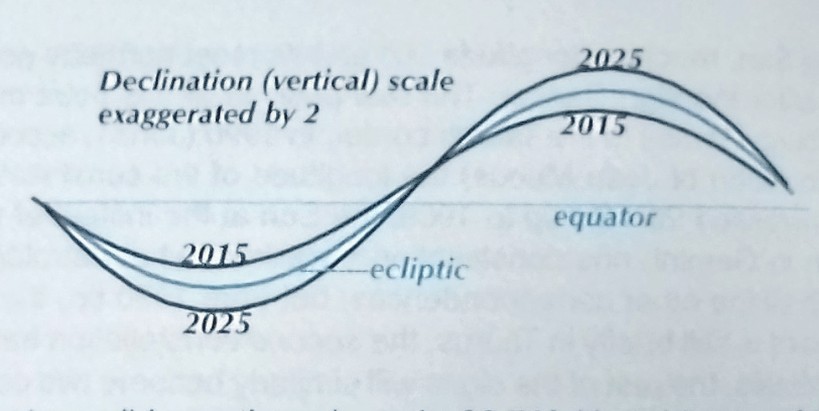
The below diagram is from Guy Ottewell’s annual publication “Astronomical Calendar 2024”, published by Universal Workshop. It shows the extremes of the moon’s path relative to the sun’s path (the ecliptic) during the 18.6 year long cycle. This year and next has the moon at its highest highs and lowest lows. This gives us in the Upper Susitna Valley an opportunity (unique to our latitude) to see the moon above Denali a couple days each month (through its various phases) for only a couple years the 18-19 year cycle. Photo op!!!!
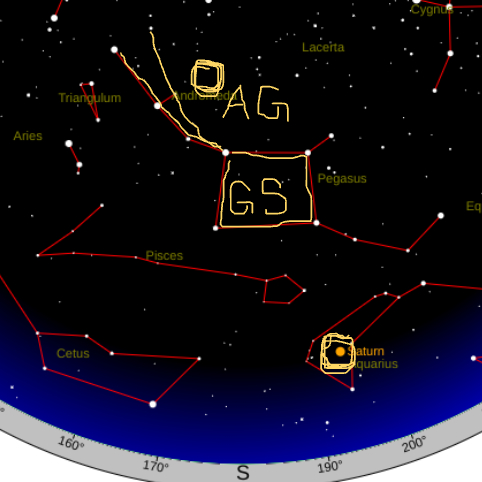
The chart below shows the Susitna Valley sky above due south around 9 pm. Kathleen has made additional lines to highlight the Great Square of Pegasus (GS), and the diverging lines of stars that form the constellation Andromeda, coming off the upper left corner of the Square. Find the closer pair of stars, and the middle further apart pair, and the last pair are a but further apart. 3 pairs of stars, forming diverging lines off of the upper left star of the square. Now, the middle pair of stars… equidistant, up and right, is the Andromeda Galaxy (a clumsy circle marked AG). It will be difficult to see with the naked eye while the moon is present, no problem with binoculars, or wait a couple weeks when the moon is out of the evening sky. Also, note Saturn, still almost perfectly aligned with the right side of the “Great Square” of Pegasus.
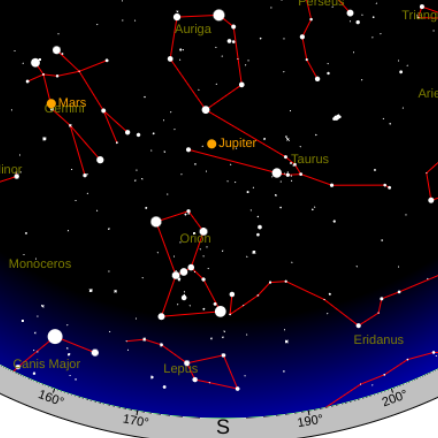
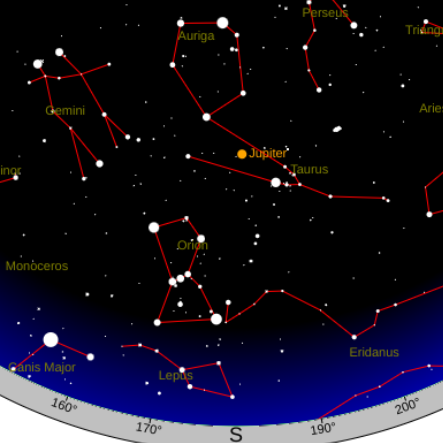
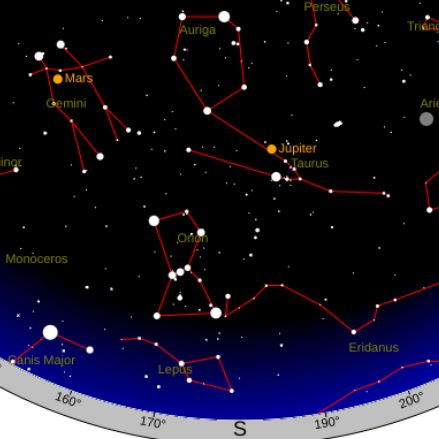
The normal motion of planets is EASTWARD along the ecliptic, through the background stars of the zodiac. Because our observing platform (Earth) is also moving, planets periodically APPEAR to be moving backwards. Jupiter is now (Dec 7th) in the middle of his retrograde loop. These charts show Jupiter’s position (near the tips of the Bull’s horns) when he began retrograde on October 9th, and now while Jupiter is at opposition (closest to earth), and the 3rd chart is for Feb 4th when Jupiter’s retrograde loop ends (at the head of Taurus) and then he will resume normal eastward motion.
You can also see in these images that Mars will also be moving westward, beginning on 12-7. Mars moves quickly through a fairly large retrograde loop, which will be very easy to notice over the next 2 and a half months.