



Air carriers are asking D.C. delegation for help with IRS again
The struggle between the Internal Revenue Service and small air carriers in Alaska is continuing over an excise tax that businesses say is unclear. This week, the Alaska Air Carriers
The struggle between the Internal Revenue Service and small air carriers in Alaska is continuing over an excise tax that businesses say is unclear. This week, the Alaska Air Carriers Association is once again turning to Alaska’s delegation in Washington, D.C. for help. KTNA’s Phillip Manning has more:
Most people don’t get too excited about the minutiae of tax law, at least until it starts hitting close to home. That’s the position that many small air carriers throughout the state have been in for the last two years. The issue is an excise tax that the IRS charges that goes to a trust fund for airport improvements. For bigger outfits flying large planes on a regular schedule, the rules are relatively clear. The problem arises when small carriers, like the ones that offer sightseeing and day trips, come into the equation. The Alaska Air Carriers Association says that the rules are confusing, and don’t track with the realities of small flightseeing operations. The Association is once again turning to Alaska’s Congressional delegation for help. Senator Mark Begich has been vocal on the issue, and took to the floor of the U.S. Senate, saying that Congress has made it clear that the intent is for those carriers not to be subject to the tax at all.
“Small aircraft, used for sightseeing, are supposed to be exempt from the excise tax. Pretty simple, pretty clear, not complicated, but the IRS doesn’t get it.”
Senator Begich says that Alaskan carriers won a small victory last month, when the IRS backed off somewhat, saying that companies that had faced crippling six-figure tax bills after excise tax audits could apply for refunds. The Alaska Air Carriers Association says that there is still a lot to be worked out, thought. In a letter dated on Monday, the Association said that recent communication with the IRS revealed that audits on the tax will continue while the regulations are worked out, no retroactive relief is currently on the table, and that companies that started charging the federal tax after the issue came to light could still be subject to back-taxes, unless they receive dispensation from the IRS Chief Counsel.
The letter goes on to offer a number of scenarios where the current IRS regulations and the operations of many air carriers don’t fit well. One such example has to do with the size of airplanes that are used. The current regulations only apply to aircraft that weigh more than 6,000 pounds. In Talkeetna, both K2 and Talkeetna Air Taxi operate planes under that weight limit, as well as DeHavilland Otters, which would be subject to the tax. The Association says that is difficult for carriers to determine when to charge, since many reservations are made months in advance, and a carrier won’t necessarily know which airplane a passenger will be on until much closer to the date of the flight, sometimes as late as the same day.
There are a number of other examples, including definitions of established routes and jet engines. The IRS has its own definitions for all of these terms. The Alaska Air Carriers Association and Senator Begich both have a similar idea for a solution, definitions that are more consistent with the Federal Aviation Administration. Senator Begich brought a photo to the Senate floor last week showing a float plane near a glacier to illustrate the point.
“They are sightseeing. That’s what they’re doing, and the law is so clear about this, but once again, the IRS has determined what they think the law is. Even the FAA, who regulates the air industry, makes it clear who is sightseeing and who is regularly scheduled.”
Alaska Senators Murkowski and Begich, and Congressman Don Young, have been involved in the fight between small air carriers and the IRS. Until clearer guidelines are in effect, however, those companies will continue to operate in a kind of limbo with regard to which passengers should be taxed.
Read More

Su Valley Voice: KTNA News Department
In this episode host Trisha Costello was joined by all three of the news producers that make up the KTNA News Department.
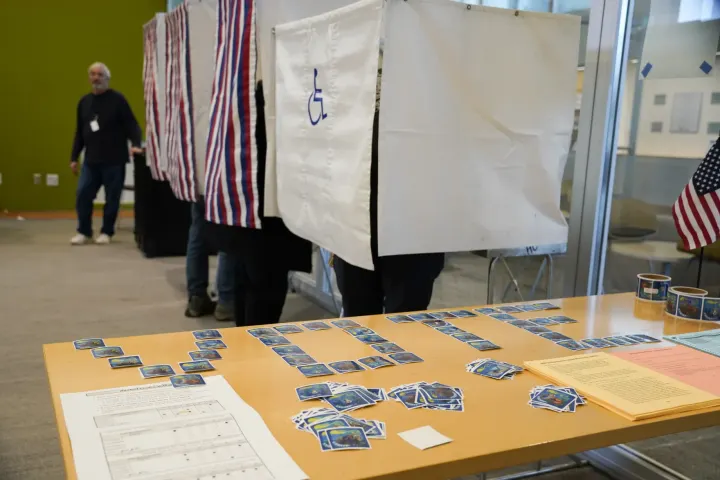
Here's how the Upper Susitna Valley's local precincts voted in statewide and district races
According to unofficial election results from the Alaska Division of Elections, the majority of Talkeetna residents voted in favor of Democrat Mary Peltola in the U.S. Senate Race

Six Minute Science 11-7-26, Episode 59 - Alaska Grown Grains
Alaska Grown grains like Sunshine Barley are helping to build Alaska's food resilience and provide economic opportunities for local Alaskans. UAF Institute for Agriculture, Natural Resources, and Extension Director Jodie Anderson talks about new grain varieties.

StarDate Susitna 11-8-26, by Kathleen Fleming
November can be a wonderful month for star gazing, and Kathleen Fleming wants to tell you about the night-sky events that may be visible in our Upper Susitna skies.