



Alaska House Energy Committee Hears Susitna-Watana Update
Updated January 31, 2023 At its January 26 meeting, the Alaska House Energy Committee heard from Curtis Thayer and Bryan Carey of the Alaska Energy Authority about the Susitna-Watana Dam
Updated January 31, 2023
At its January 26 meeting, the Alaska House Energy Committee heard from Curtis Thayer and Bryan Carey of the Alaska Energy Authority about the Susitna-Watana Dam project.
Shelved in 2014 and unshelved in 2019, the project continues to be discussed as an alternative to help meet the state’s goal of 50 percent renewable energy. To date, the project has cost Alaskans $200 million and will cost another $100 million to get it through the Federal Energy Regulatory Commission, or FERC, licensing process.
Thayer noted that if the project were built today, it would be producing more than 50 percent of the electricity for customers along the rail belt. But to get the project to the licensing phase, it will take not only $100 million, but also at least another four to five years. Before that can happen, there would need to be a reevaluation of all the 58 FERC-approved studies, 19 of which are completed, to be sure the project is still viable.
Though the project is estimated to reduce carbon emissions at about 1.5 million tons per year, equivalent to removing about 250,000 cars from the road, construction would take nine to eleven years after approvals and cost 5.6 billion in 2014 dollars.
The project timeline is about 20 years to complete at this point. In the end, it would produce about 23,000 direct and indirect jobs during construction, with 135 permanent operations jobs when complete.
Representative Tom McKay asked about salmon moving upstream through the dam. The AEA’s Bryan Carey indicates that chinook salmon that were able to make it above Devil’s Canyon were few and many used smaller tributaries for spawning rather than the Talkeetna River proper. Carey also indicates that fish passage through the dam may be challenging.
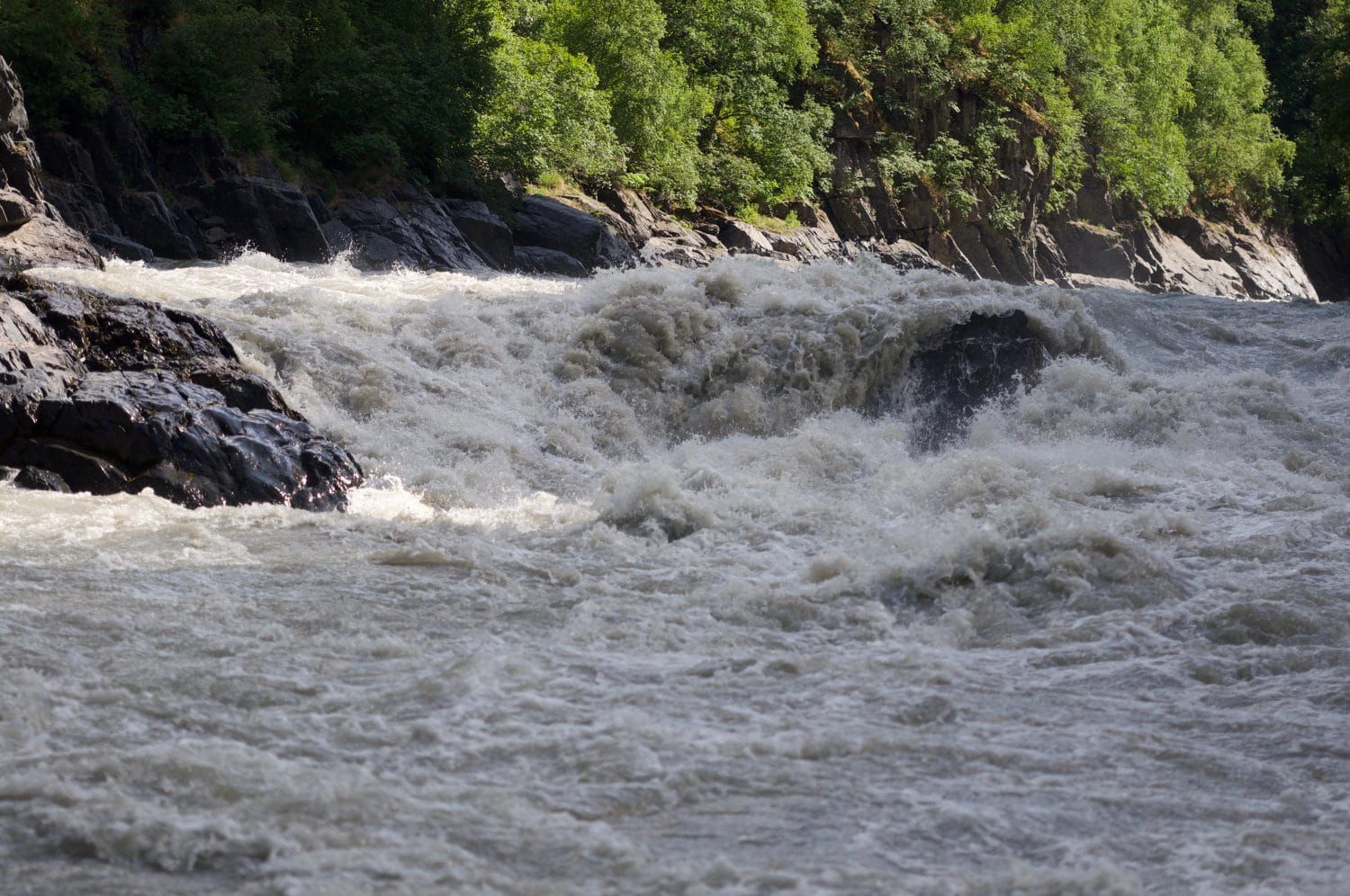
Representative McKay also asked about river flows. Carey explains how the water flows would be altered during each season, but is unsure how ice dams might be affected downstream.
This indicates a significant change in flows from season to season, with higher-than-normal flows in winter and lower-than-normal flows in summer, which could impact fisheries and habitat.
Susitna River Coalition Board President Mike Wood says, “There’s a million reasons it shouldn’t happen and most of them relate to economics. That doesn’t even include the environmental impact.”
There continue to be a variety of renewable energy projects built in the Susitna Valley, including two major solar fields, with more proposed in the coming years. Wood says “They’re putting all their eggs in one basket with the Susitna Dam. It’s not diversifying the portfolio as they would with wind and solar.”
Correction: The original version of this article misspelled Bryan Carey’s name. It was corrected January 30, 2023.
Read More
Trapper Creek Traffic Study Does Not Support Speed Reductions
Despite Monday’s fatal car accident in Trapper Creek, a recent D-O-T traffic study does not support slower speeds.

2026 Alaska Voters Guide
Early voting in the state’s November 2026 Midterm Election is underway in most of Alaska. Find out where to vote early.
Su Valley Voice for October 22, 2026: Willow Community
Host Trisha Costello talks with the Willow Library, the Willow Community Emergency Response Team, and KTNA News Producer Marion Chesterton.
Susitna Writer's Voice - October 19th, 2026, Acceptance pt 2 by Ruth Wood and Kathy Trump
This is the second of a new 3-part Susitna Writer's Voice featuring a story written and read by Kathy Trump and Ruth Wood.