



First elasmosaur fossils in Alaska discovered in Talkeetna Mountains
Earlier this summer, paleontologists confirmed that fossilized vertebrae found in the Talkeetna Mountains belonged to an ancient sea creature, the elasmosaur. This is the first time that remains of the
Earlier this summer, paleontologists confirmed that fossilized vertebrae found in the Talkeetna Mountains belonged to an ancient sea creature, the elasmosaur. This is the first time that remains of the species have been found in the state. KTNA’s Phillip Manning has more:
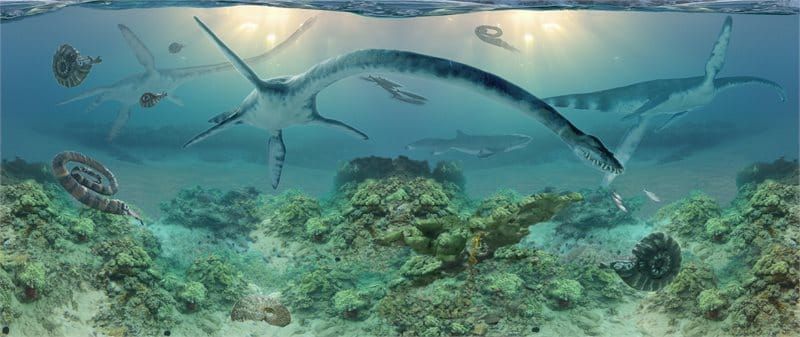
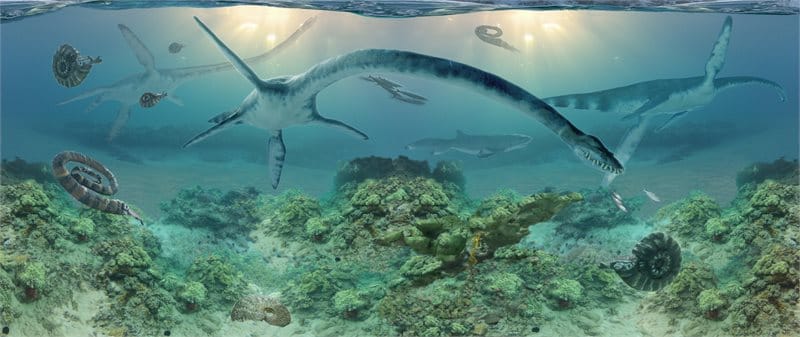
The elasmosaur was a carnivorous reptile that prowled the oceans during the Cretaceous Period, which ended about sixty-five million years ago. Pat Druckenmiller is the earth sciences curator at the University of Alaska’s Museum of the North. As he explains, the most striking feature of the elasmosaur was its incredibly long neck.
“Imagine an animal, maybe thirty feet long, with half of that length being its neck, and this long neck sticking out supporting a relatively small head at the end.”
Based purely on description, the elasmosaur can be hard to picture in the imagination. Druckenmiller says there is one good visual comparison.
“Although I’m a little loathe to use the comparison, if you think of the Loch Ness Monster–which is definitely a mythical animal–that mythical animal was basically based on the body plan of an elasmosaur.”
With elasmosaur’s neck taking up as much as half of its total body length, it had to serve some evolutionary advantage. Pat Druckentmiller says scientists don’t agree on what exactly that purpose is nearly a hundred and fifty years after the animal’s remains were first discovered.
“That’s the million dollar question, and frankly that’s defied any widely-accepted answer.”
Druckenmiller says there are plenty of theories that try to explain the purpose of elasmosaur’s extreme anatomy. Many of them deal with feeding. Pat thinks that there are other possibilities as well, however.
“One idea I like, actually, is that sometimes animals have very strange anatomy because they use them for sexual selection, in other words showing off to potential mates, and species recognition. So that’s also a possibility.”
While scientists continue to work toward a consensus on elasmosaur’s neck, the other question I wanted the answer to was how an animal that lived in the ocean found itself, millions of years later, buried in a cliff at over 4,000 feet of elevation. Pat Druckenmiller says finding marine fossils at elevation is not uncommon.
“Alaska looked very different. In fact, these rocks, which were being laid down as sediment below sea level, were along the southern margin of what was Alaska, then. In the last seventy-million years, because of movements of the Pacific seafloor under Alaska, they’ve been crunched and brought up above sea level.”
Druckenmiller says that a great deal of credit should go to Curvin Metzler, the Anchorage resident who first noticed the bones eroding out of a cliff in the Talkeetna Mountains and called the Museum of the North.
“My hat’s off to somebody who does what I would say is the right thing in this situation and reports significant finds like that to the museum so we can study it and share it with the rest of the world.”
Pat Druckenmiller believes that a large portion of the elasmosaur’s skeleton is fossilized in the mountain, and he and his team will continue their work to extract it next summer.
Read More

Susitna Writer's Voice - October 26th, 2026, Acceptance pt 3 by
This is the final segment 3-part Susitna Writer's Voice featuring a story written and read by Kathy Trump and Ruth Wood.
Trapper Creek Traffic Study Does Not Support Speed Reductions
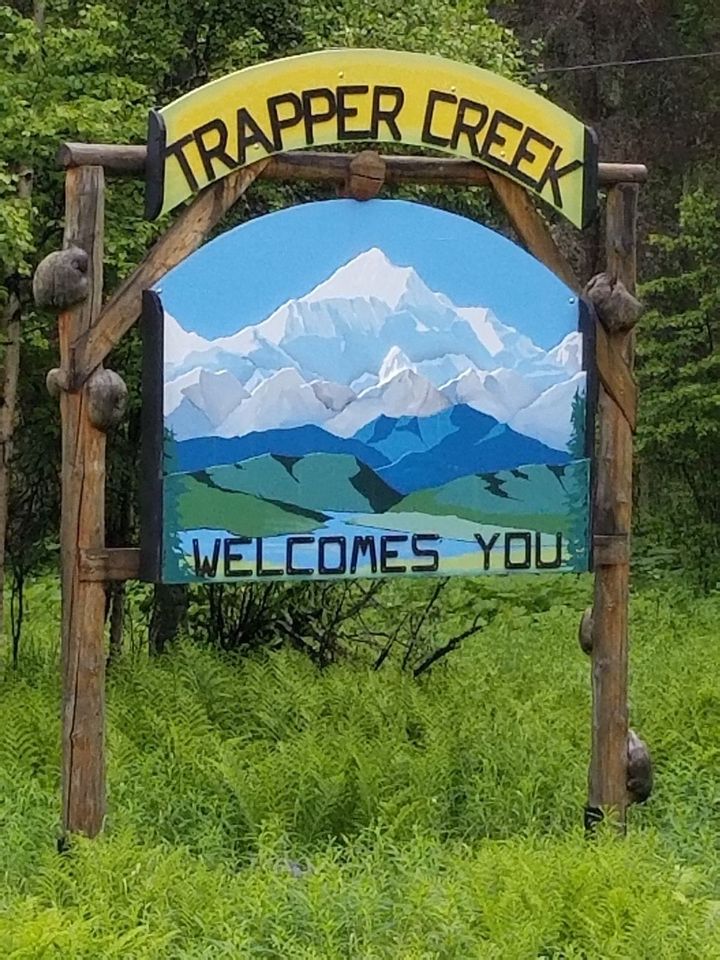
Despite Monday’s fatal car accident in Trapper Creek, a recent D-O-T traffic study does not support slower speeds.

2026 Alaska Voters Guide
Early voting in the state’s November 2026 Midterm Election is underway in most of Alaska. Find out where to vote early.
Su Valley Voice for October 22, 2026: Willow Community
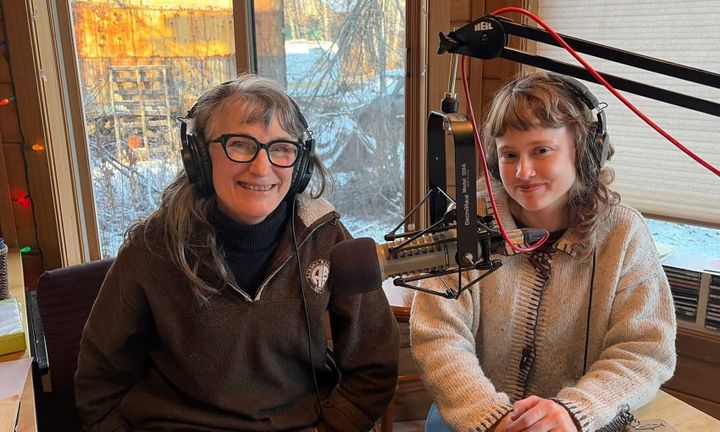
Host Trisha Costello talks with the Willow Library, the Willow Community Emergency Response Team, and KTNA News Producer Marion Chesterton.