



Lack of Snow on North Side of Alaska Range Forces Iditarod Start in Fairbanks
Since the 1970s, the Iditarod race has brought attention to the historic effort to bring vital diphtheria medication from Seward to Nome in 1925. According to the Iditarod website, the
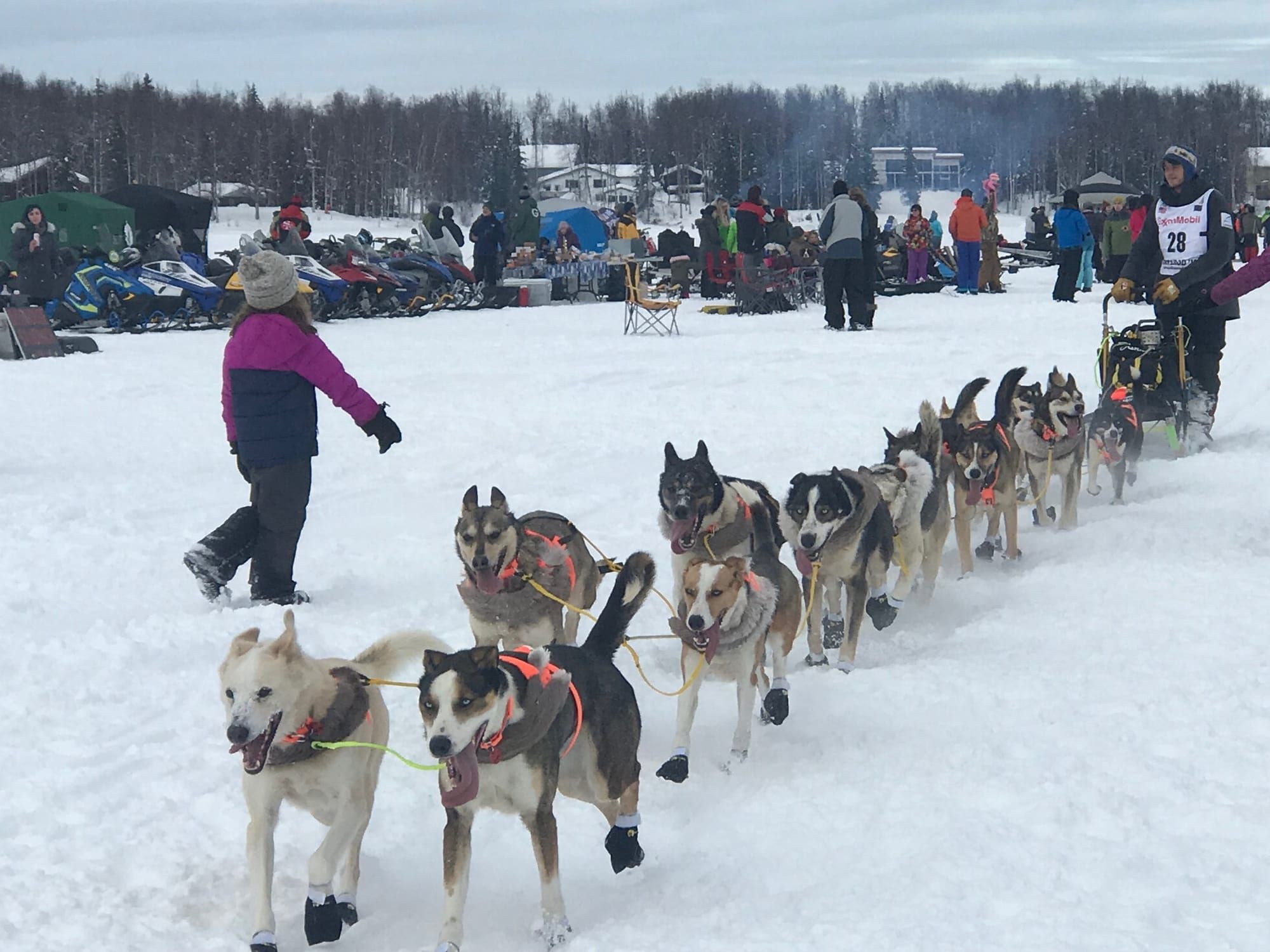
Since the 1970s, the Iditarod race has brought attention to the historic effort to bring vital diphtheria medication from Seward to Nome in 1925. According to the Iditarod website, the first race that ended in Nome was in 1973. It was up to the mushers to break their own trail and carry their own supplies that year. The winner took nearly three weeks to reach Nome.
Most winning mushers today finish in just over a week. And Willow is the start most every year. But this is the fourth time in the race’s 53-year history that the start has moved in favor of an alternative route with better conditions. Those four restart shifts have all been since 2003.
According to Alaska Center for Climate Assessment and Policy Climate Specialist Rick Thoman, this year’s snow and snowpack across Alaska have been complex this year. The snow in the Susitna Valley has been near or just below normal at lower elevations. Snowfall at higher elevations and in the interior have been well above normal. And some areas in Bristol Bay and into the Kuskokwim have no snow.
“This year unlike say in 2003, when the restart was moved to Fairbanks, the problem is not that there’s not enough snow from Willow on up into the Alaska Range. The problem is just on the North side of the Alaska Range. So from Rohn down into the upper Kuskokwim drainage to south of Nikolai. Of course that’s the famous, or infamous, Farewell Burn area, where there’s often very low snow cover, very rough trail. This year though there’s a significantly larger area with basically no snow on the ground. Miles of snow-free or nearly snow-free trail.”
That Farewell Burn area is the site of Alaska’s largest wildfire in 1978. And it’s in the Alaska Range’s shadow. That meant a lot of rain melting what little snow there was.
“And since then, of course, we’ve been in a fairly dry pattern and so we haven’t had a big storm come along to put down enough snow so that the mushers could get through there.”
The Iditarod is not the only race to be affected by lack of snow. Some, like the Kuskokwim 300, delayed its start until more snow fell. Others like the Su Dog 300 Sled Dog race were canceled this year. Thoman says these strange weather patterns are what we can expect in a warming climate.
Read More
Trapper Creek Traffic Study Does Not Support Speed Reductions
Despite Monday’s fatal car accident in Trapper Creek, a recent D-O-T traffic study does not support slower speeds.

2026 Alaska Voters Guide
Early voting in the state’s November 2026 Midterm Election is underway in most of Alaska. Find out where to vote early.

Su Valley Voice for October 22, 2026: Willow Community
Host Trisha Costello talks with the Willow Library, the Willow Community Emergency Response Team, and KTNA News Producer Marion Chesterton.

Susitna Writer's Voice - October 19th, 2026, Acceptance pt 2 by Ruth Wood and Kathy Trump
This is the second of a new 3-part Susitna Writer's Voice featuring a story written and read by Kathy Trump and Ruth Wood.